
Entering your 7th month of pregnancy is a major milestone you’ve officially stepped into the third trimester, the final stage of your pregnancy journey. With just a few months left before you meet your little one, your baby is growing rapidly, becoming stronger, and preparing for life outside the womb.
At this stage, you may notice stronger baby movements, a larger baby bump, and increasing physical changes. While the excitement of meeting your baby grows, you may also experience symptoms such as back pain, swelling, shortness of breath, heartburn, and difficulty sleeping.
You might be wondering:
- “Why is my baby kicking so much?”
- “What foods should I eat during the seventh month?”
- “Are these Braxton Hicks contractions normal?”
- “Which pregnancy checkups are important now?”
If these questions sound familiar, you’re not alone. The seventh month brings many new experiences, and understanding what’s happening can help you feel more prepared for the weeks ahead.
In this guide, we’ll cover everything you need to know about 7 months pregnancy symptoms, baby development, diet chart, important checkups, sleeping positions, and precautions to support a healthy pregnancy.
7 Months Pregnancy at a Glance
| Pregnancy Detail | Information |
| Pregnancy Month | Seventh Month |
| Weeks Covered | Week 25 to Week 28 |
| Baby Size | About the size of an eggplant (by Week 28) |
| Baby Length | Approximately 35-38 cm |
| Baby Weight | Around 900 – 1,200 grams |
| Major Development | Brain develops rapidly, lungs mature further, eyes open and close, baby responds to sound and light |
| Common Symptoms | Strong baby kicks, back pain, swelling, heartburn, Braxton Hicks contractions, shortness of breath |
| Important Checkups | Blood Pressure, Urine Tests, Blood Tests, Gestational Diabetes Screening (if not already done), Growth Monitoring |
What Happens During the Seventh Month of Pregnancy?
The seventh month includes weeks 25 to 28 and marks the beginning of the third trimester.
Your baby is growing quickly and becoming more active. Their kicks, stretches, and rolls are stronger than ever, and you may begin to notice regular movement patterns throughout the day.
Your uterus continues expanding, placing more pressure on your lungs, bladder, stomach, and back. As a result, you may experience shortness of breath, frequent urination, heartburn, and back discomfort.
This is also the time to start preparing for your baby’s arrival by discussing your birth plan with your healthcare provider and attending all scheduled prenatal appointments.
Week-by-Week: What’s Happening During the Seventh Month
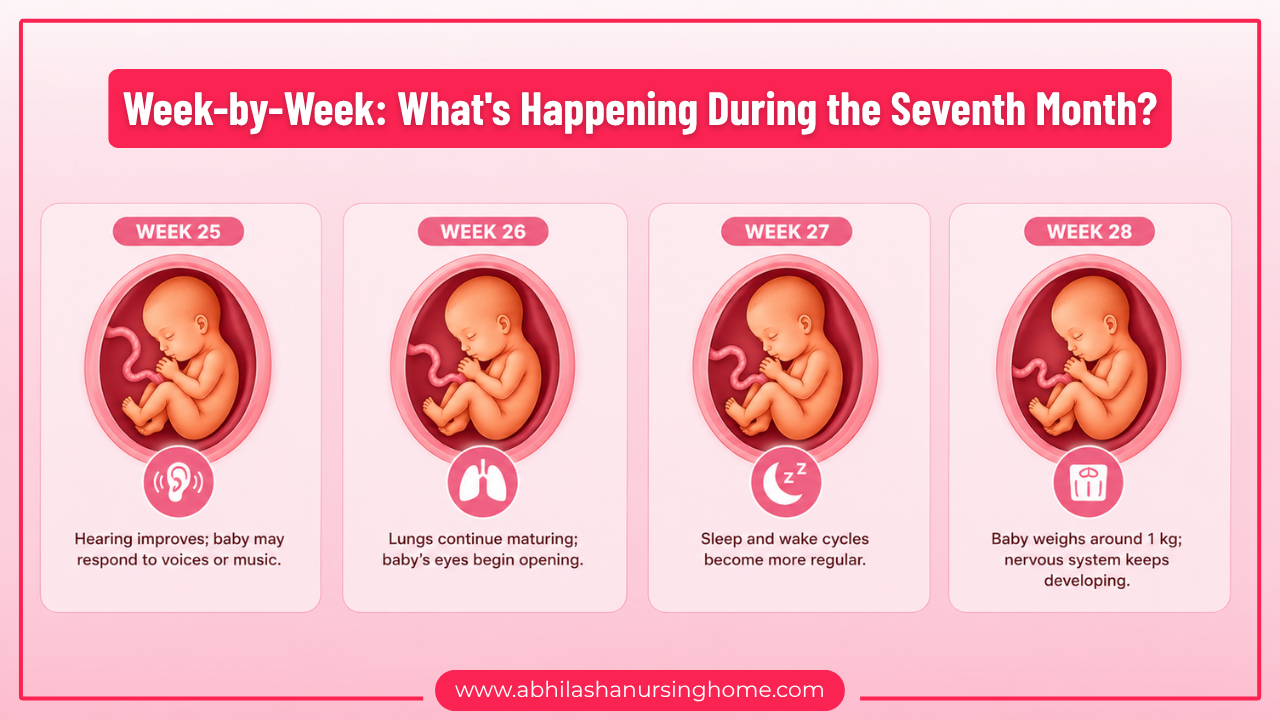
Week 25
Your baby’s hearing becomes more developed, and they may respond to familiar voices or music. Body fat continues to build beneath the skin.
Week 26
The lungs continue maturing, and your baby’s eyes begin opening. Brain development accelerates significantly.
Week 27
Your baby’s sleep and wake cycles become more regular. They may suck their thumb and continue practicing breathing movements.
Week 28
By the end of the seventh month, your baby weighs around 1 kilogram. Their nervous system continues developing, and they are becoming better prepared for life outside the womb.
Changes Happening in Your Body
As your baby grows, your body continues adapting to support the pregnancy.
Common changes include:
- A larger and heavier baby bump
- Strong, frequent baby movements
- Weight gain
- Stretch marks
- Swelling in the feet and ankles
- Increased back and pelvic discomfort
- Difficulty sleeping
- More frequent urination
- Occasional Braxton Hicks contractions
Remember, every pregnancy is unique, so your experience may differ from someone else’s.
7 Months Pregnancy Symptoms: What Can You Expect?
Strong Baby Movements
Your baby’s movements are now much stronger and easier to recognize. You may feel kicks, stretches, rolls, and even rhythmic hiccups.
As your baby grows, movements may feel more forceful because there is less space inside the uterus.
Back Pain
The growing weight of your baby shifts your center of gravity, placing extra pressure on your back and pelvis.
Maintaining good posture, wearing supportive footwear, and performing pregnancy-safe exercises can help ease discomfort.
Shortness of Breath
Your growing uterus pushes upward against your diaphragm, making it feel harder to take deep breaths.
Taking things slowly, maintaining good posture, and avoiding overexertion can help.
Heartburn
As your uterus enlarges, it puts pressure on your stomach, making acid reflux more common.
Eating smaller meals and avoiding spicy or oily foods may reduce symptoms.
Swelling
Mild swelling in your feet, ankles, and hands is common due to increased blood volume and fluid retention.
Elevating your feet and staying hydrated may help.
However, sudden swelling accompanied by headaches or blurred vision should be evaluated immediately.
Braxton Hicks Contractions
During the seventh month, you may notice occasional tightening of your abdomen.
These are called Braxton Hicks contractions, often referred to as practice contractions.
They are usually:
- Mild
- Irregular
- Short-lasting
- Relieved by rest or hydration
If contractions become regular, painful, or are accompanied by bleeding or fluid leakage, seek immediate medical care.
Difficulty Sleeping
Finding a comfortable sleeping position becomes more challenging as your bump grows.
Using a pregnancy pillow and sleeping on your left side can improve comfort and circulation.
Is It Normal for Baby Movements to Feel Stronger?
Yes.
During the seventh month, your baby’s muscles are stronger, and there is still enough space for active movement.
You may notice:
- Powerful kicks
- Rolling movements
- Stretching
- Hiccups
Learning your baby’s usual movement pattern is important. If you notice a significant reduction in movements, contact your healthcare provider promptly.
Baby Development at 7 Months Pregnancy
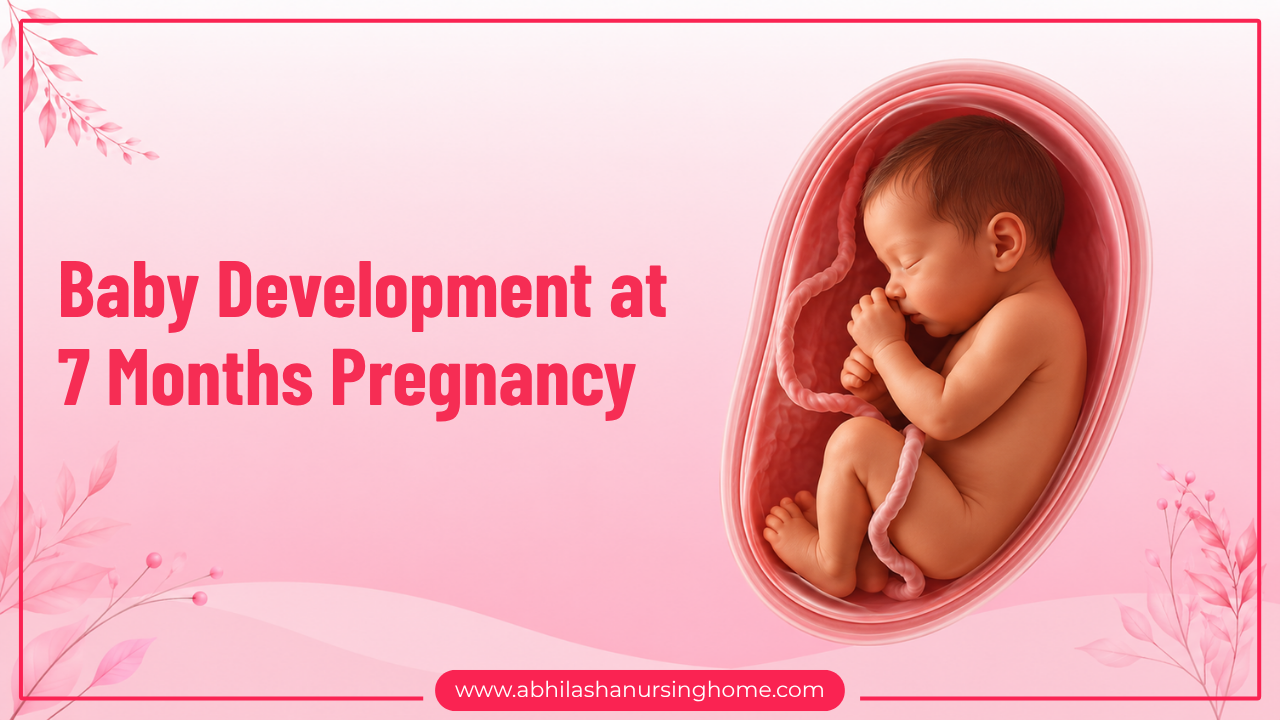
The seventh month is a period of remarkable growth.
By the end of week 28:
- Your baby measures approximately 35–38 cm.
- Weight reaches around 900–1,200 grams.
- The brain develops rapidly.
- The lungs continue producing surfactant, preparing for breathing after birth.
- Eyes open and close.
- Eyelashes become more prominent.
- Body fat increases.
- The baby responds to light, sound, and touch.
- Sleep cycles become more organized.
- The immune system continues developing.
Although your baby still needs more time to grow, they are becoming increasingly prepared for life outside the womb.
What Should You Eat During the Seventh Month of Pregnancy?
Your baby now requires more nutrients to support continued growth and brain development.
Rather than increasing portion sizes significantly, focus on nutrient-rich foods.
Protein-Rich Foods
Include:
- Eggs
- Paneer
- Lentils
- Chicken
- Fish (if approved)
- Soy products
Iron-Rich Foods
Choose:
- Spinach
- Dates
- Beetroot
- Beans
Green leafy vegetables
Vitamin C-rich foods such as oranges can improve iron absorption.
Calcium-Rich Foods
Support your baby’s developing bones with:
- Milk
- Yogurt
- Cheese
- Ragi
- Almonds
Healthy Fats
Healthy fats support brain development.
Include:
- Walnuts
- Flaxseeds
- Chia seeds
- Avocados (if available)
Fruits and Vegetables
Eat a variety of colorful fruits and vegetables every day.
Whole Grains
Choose:
- Oats
- Brown rice
- Whole wheat roti
- Multigrain bread
Foods to Avoid
Continue avoiding:
- Alcohol
- Smoking
- Raw seafood
- Unpasteurized dairy products
- Excess caffeine
- Highly processed foods
Drink 8-10 glasses of water daily to stay hydrated.
Simple Diet Chart for 7 Months Pregnancy
| Meal | Suggested Foods |
| Breakfast | Vegetable oats with milk and fruit |
| Mid-Morning Snack | Yogurt with nuts |
| Lunch | Dal, whole wheat roti, vegetables, salad |
| Evening Snack | Fruit with roasted chana |
| Dinner | Paneer, chicken, or dal with vegetables and brown rice |
| Bedtime | Warm milk (if recommended by your doctor) |
Important Checkups During the Seventh Month
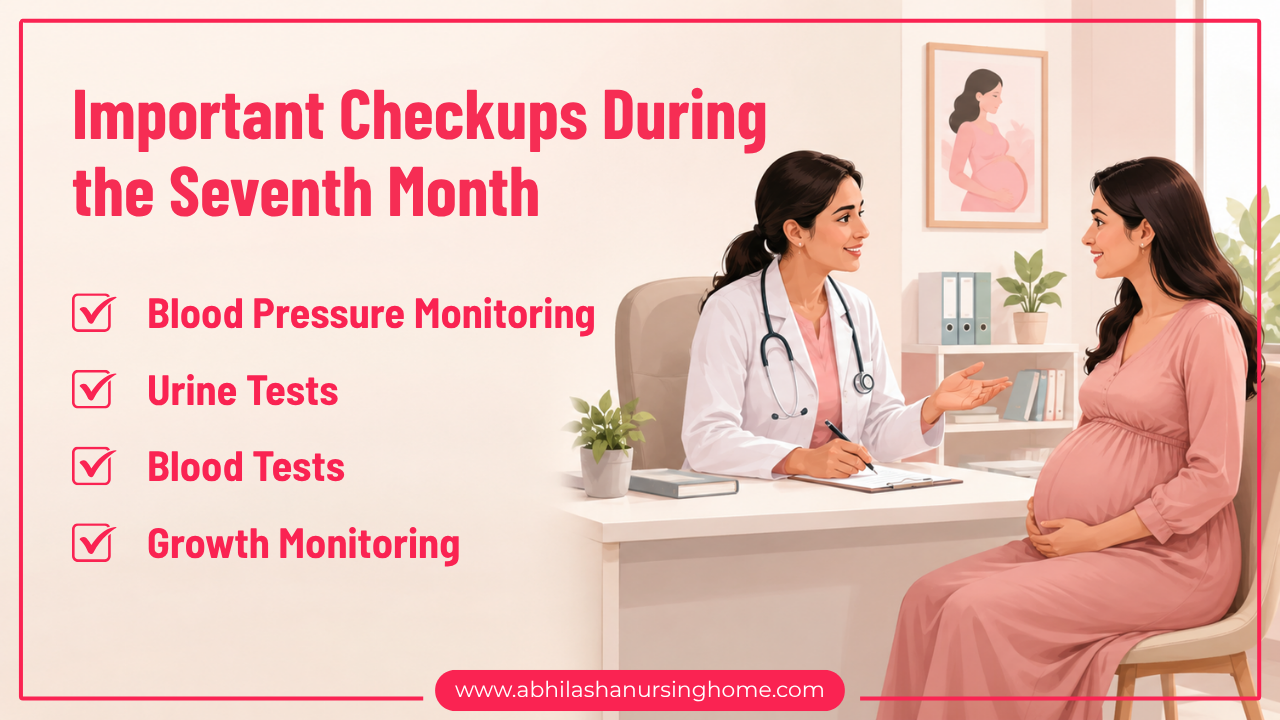
Regular prenatal appointments become even more important during the third trimester.
Your doctor may recommend:
Blood Pressure Monitoring
To screen for pregnancy-related hypertension or preeclampsia.
Urine Tests
To detect:
- Protein
- Sugar
- Urinary infections
Blood Tests
To assess:
- Hemoglobin
- Blood sugar
- Iron levels
Growth Monitoring
Your healthcare provider will monitor:
- Baby’s heartbeat
- Baby’s movements
- Fundal height
- Maternal weight gain
- Overall fetal growth
If needed, an ultrasound may be recommended to evaluate your baby’s development.
Best Sleeping Position During the Seventh Month
Sleeping on your left side is generally recommended during the third trimester.
This position may:
- Improve blood flow to your baby
- Support healthy circulation
- Reduce pressure on major blood vessels
- Improve kidney function
Using pillows between your knees and under your abdomen can improve comfort.
Pregnancy Precautions During the Seventh Month
Do:
✔ Eat balanced meals
✔ Stay hydrated
✔ Take prenatal vitamins
✔ Walk regularly if advised
✔ Count baby movements
✔ Attend every prenatal appointment
✔ Rest whenever needed
Avoid:
✘ Smoking
✘ Alcohol
✘ Heavy lifting
✘ Self-medication
✘ Standing for long periods
✘ Skipping meals
Pregnancy Warning Signs You Should Never Ignore
Seek immediate medical attention if you experience:
- Heavy vaginal bleeding
- Leakage of fluid
- Severe abdominal pain
- Persistent severe headache
- Blurred vision
- High fever
- Sudden swelling of the face or hands
- Regular painful contractions before 37 weeks
- Noticeably reduced baby movements
Prompt medical care can help identify and manage complications early.
Frequently Asked Questions
Q 1. Is it normal to feel stronger baby kicks during the seventh month?
Yes. Stronger movements are expected as your baby’s muscles and nervous system continue developing.
Q 2. Why am I getting Braxton Hicks contractions?
These are practice contractions that help prepare your uterus for labor. They are usually mild, irregular, and temporary.
Q 3. Can I travel during the seventh month?
Many women can still travel safely, but consult your healthcare provider before making travel plans, especially for long journeys.
Q 4. Is walking safe during the seventh month?
Yes. Gentle walking is generally safe unless your doctor advises otherwise.
Q 5. Can a baby survive if born at seven months?
Babies born around 28 weeks have a significantly better chance of survival with modern neonatal intensive care.
However, they still require specialized medical support and close monitoring.
Final Thoughts on seventh month
The seventh month of pregnancy marks the beginning of the final trimester and brings you one step closer to meeting your baby. As your little one continues to grow and develop, regular prenatal care, healthy eating, and adequate rest become even more important.
While symptoms like back pain, swelling, and sleep disturbances are common, they are often a normal part of this stage. Listening to your body, staying hydrated, following your doctor’s advice, and attending all prenatal checkups can help support a healthy pregnancy.
Remember, every pregnancy is different. Focus on your own journey, celebrate each milestone, and don’t hesitate to seek medical guidance whenever you have concerns.
If you’re in your 7th month of pregnancy, Abhilasha Nursing Home is here to support you with expert prenatal care, routine pregnancy checkups, fetal monitoring, nutritional guidance, and compassionate maternity services to help you enjoy a safe and healthy pregnancy.
You May Also Like to Read:
- 5 Months Pregnancy Guide
- 4 Months Pregnancy Guide
- 3 Months Pregnancy Guide
- 2 Months Pregnancy Guide
- 1 Month Pregnancy Guide
Disclaimer: This article is intended for informational purposes only and should not replace professional medical advice, diagnosis, or treatment. Always consult your healthcare provider regarding any pregnancy-related concerns.