
If your doctor has recommended laparoscopy, you may wonder, “Why is laparoscopy done?” Understanding the reason for the procedure can help you feel more prepared and less anxious about surgery.
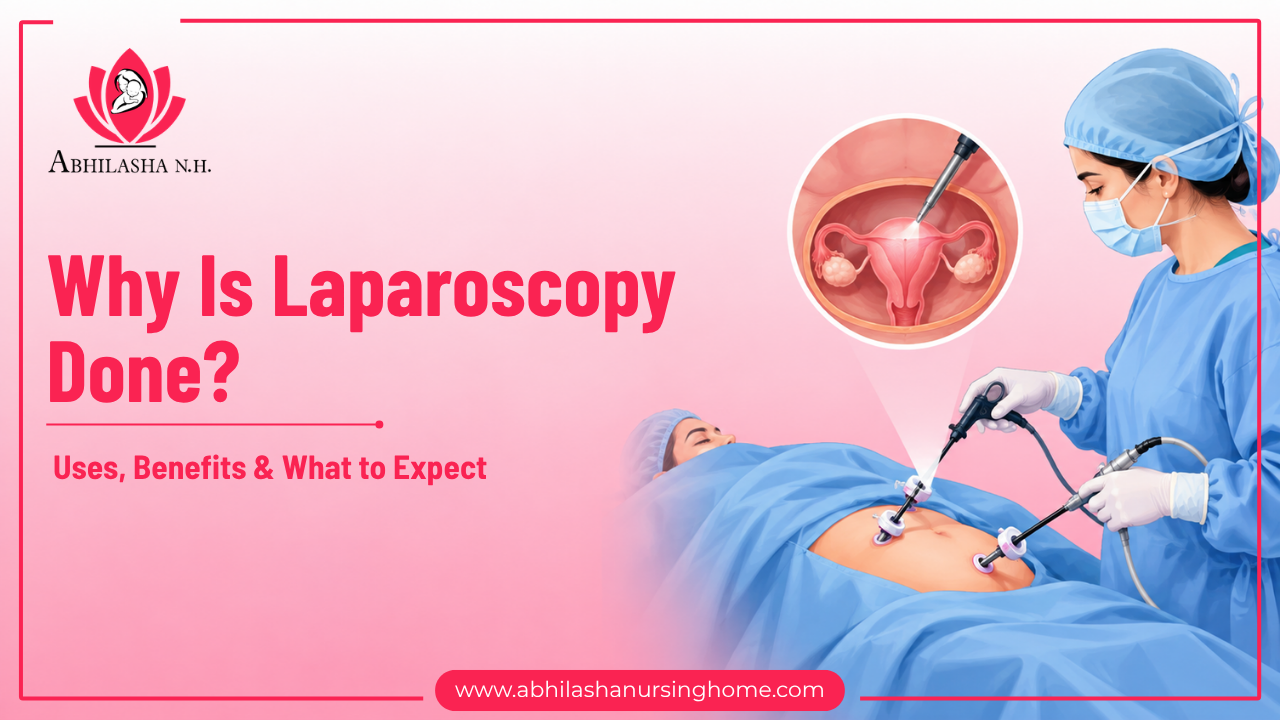
Laparoscopy is a minimally invasive surgical procedure used to examine or treat organs inside the abdomen and pelvis. Instead of making one large abdominal incision, the surgeon uses a thin camera called a laparoscope through a small incision. Additional small incisions may be made if surgical instruments are needed.
In gynaecology, laparoscopy can be used to diagnose certain conditions, investigate unexplained symptoms, or treat problems affecting the uterus, ovaries, fallopian tubes, and surrounding tissues.
Why Is Laparoscopy Done?
Laparoscopy may be recommended for different diagnostic and treatment purposes. The exact reason depends on your symptoms, diagnosis, medical history, and the treatment your doctor believes is appropriate.
1. To Diagnose Endometriosis
Laparoscopy can help doctors identify endometriosis, a condition in which tissue similar to the lining of the uterus grows outside the uterus.
It may be considered when a patient has symptoms such as pelvic pain, painful periods, or fertility difficulties and other evaluations have not provided a clear explanation.
When appropriate, endometriosis lesions may also be treated during the same procedure.
2. To Investigate Infertility
In some cases, laparoscopy may be used as part of an infertility evaluation.
It can help doctors look for conditions such as endometriosis, pelvic adhesions, or abnormalities involving the reproductive organs. Depending on the findings, certain problems may be treated during the same procedure.
Laparoscopy is not required for every person experiencing infertility. Your doctor will determine whether it is appropriate based on your individual situation.
3. To Examine Ovarian Cysts
Some ovarian cysts may require surgical evaluation or treatment. Depending on the size, appearance, symptoms, and other factors, laparoscopic surgery may be considered to remove a cyst while using smaller abdominal incisions.
The appropriate approach depends on the type of cyst and your overall health.
4. To Treat Fibroids
Fibroids are non-cancerous growths that can develop in or around the uterus. Some fibroids may cause heavy menstrual bleeding, pelvic pressure, pain, or fertility problems.
For selected patients, laparoscopic surgery may be used to remove fibroids. This procedure is known as laparoscopic myomectomy.
5. To Examine the Fallopian Tubes and Pelvic Organs
Laparoscopy can allow the surgeon to directly examine the fallopian tubes, ovaries, uterus, and surrounding pelvic structures.
It may help identify problems such as pelvic adhesions or other abnormalities that cannot always be diagnosed through routine examinations alone.
6. To Treat Pelvic Adhesions
Pelvic adhesions are bands of scar tissue that can develop after previous surgery, infection, endometriosis, or other conditions.
In selected cases, laparoscopic surgery may be used to identify and treat adhesions when medically appropriate.
7. For Certain Gynaecological Surgeries
Laparoscopy can also be used for several gynaecological procedures, including selected cases of laparoscopic hysterectomy and other minimally invasive surgeries.
Whether laparoscopic surgery is suitable depends on the patient’s condition, the complexity of the surgery, previous medical history, and the surgeon’s assessment.
What Are the Benefits of Laparoscopy?
One of the main advantages of laparoscopy is that it generally requires smaller incisions than traditional open abdominal surgery.
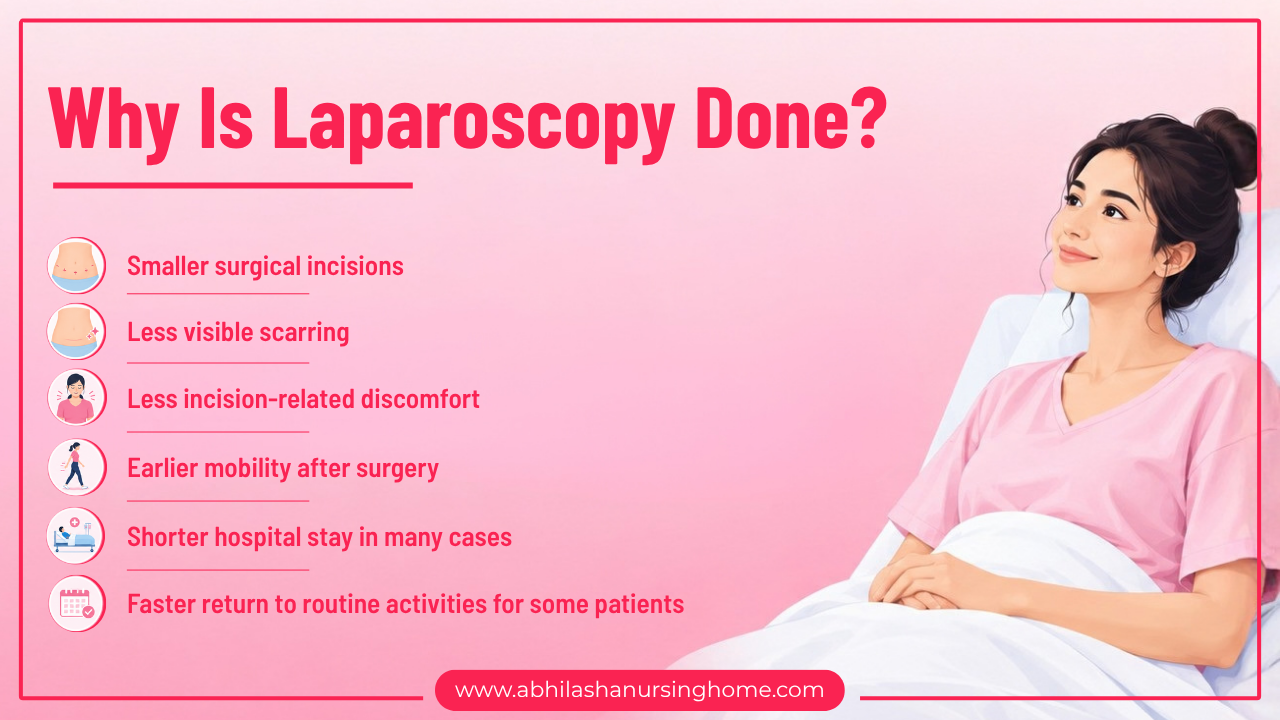
Depending on the procedure, potential benefits may include:
- Smaller surgical incisions
- Less visible scarring
- Less incision-related discomfort
- Earlier mobility after surgery
- Shorter hospital stay in many cases
- Faster return to routine activities for some patients
However, the benefits and recovery time vary depending on the type of surgery and individual health.
Is Laparoscopy Safe?
Laparoscopy is a commonly performed minimally invasive surgical approach and can be safe for many appropriately selected patients. However, like any surgery, it carries potential risks.
Your doctor will review your medical history, the condition being treated, and the planned procedure before deciding whether laparoscopy is suitable for you.
When Should You Talk to Your Doctor About Laparoscopy?
Your doctor may discuss laparoscopy when symptoms, examination findings, imaging, or other investigations suggest that direct examination or surgical treatment may be helpful.
If you have ongoing pelvic pain, suspected endometriosis, certain ovarian or uterine conditions, or specific fertility-related concerns, speak with a gynaecologist about your symptoms and available treatment options.
FAQs About Why Laparoscopy Is Done
Q 1. Why is laparoscopy done in gynaecology?
It may be used to diagnose or treat conditions affecting the uterus, ovaries, fallopian tubes, and pelvic area, including selected cases of endometriosis, ovarian cysts, fibroids, adhesions, and infertility-related conditions.
Q 2. Is laparoscopy only used for diagnosis?
No. Laparoscopy can be used for both diagnosis and treatment. When appropriate, a condition identified during the procedure may be treated during the same surgery.
Q 3. Is laparoscopy done for infertility?
It may be recommended in selected cases to investigate or treat certain conditions associated with infertility. It is not necessary for every person experiencing fertility problems.
Q 4. How long does recovery take after laparoscopy?
Recovery depends on the type and complexity of the procedure. Your doctor will provide specific instructions about returning to work, exercise, and normal activities.
Final Thoughts: why is laparoscopy done?
So, why is laparoscopy done? Laparoscopy can help doctors directly examine the abdomen and pelvis and, when required, treat certain conditions using a minimally invasive surgical approach.
It may be considered for conditions such as endometriosis, ovarian cysts, fibroids, pelvic adhesions, certain infertility-related problems, and selected gynaecological surgeries.
If your doctor has recommended laparoscopy, ask about the reason for the procedure, available alternatives, potential benefits and risks, and expected recovery. Understanding your treatment can help you make informed decisions about your health.
At Abhilasha Nursing Home, Agra, patients can consult a gynaecologist to understand their symptoms, diagnosis, and suitable treatment options, including laparoscopic procedures when medically appropriate.
Disclaimer: This article is intended for general informational purposes only and should not replace professional medical advice, diagnosis, or treatment. The need for laparoscopy depends on the individual patient’s condition, medical history, and clinical assessment. Always discuss your treatment options with your treating doctor.