
If you have been experiencing heavy periods, irregular bleeding, or difficulty getting pregnant, your gynecologist may recommend a diagnostic hysteroscopy. Hearing the name of a medical procedure can feel worrying, especially when you are unsure why it is needed or what to expect.
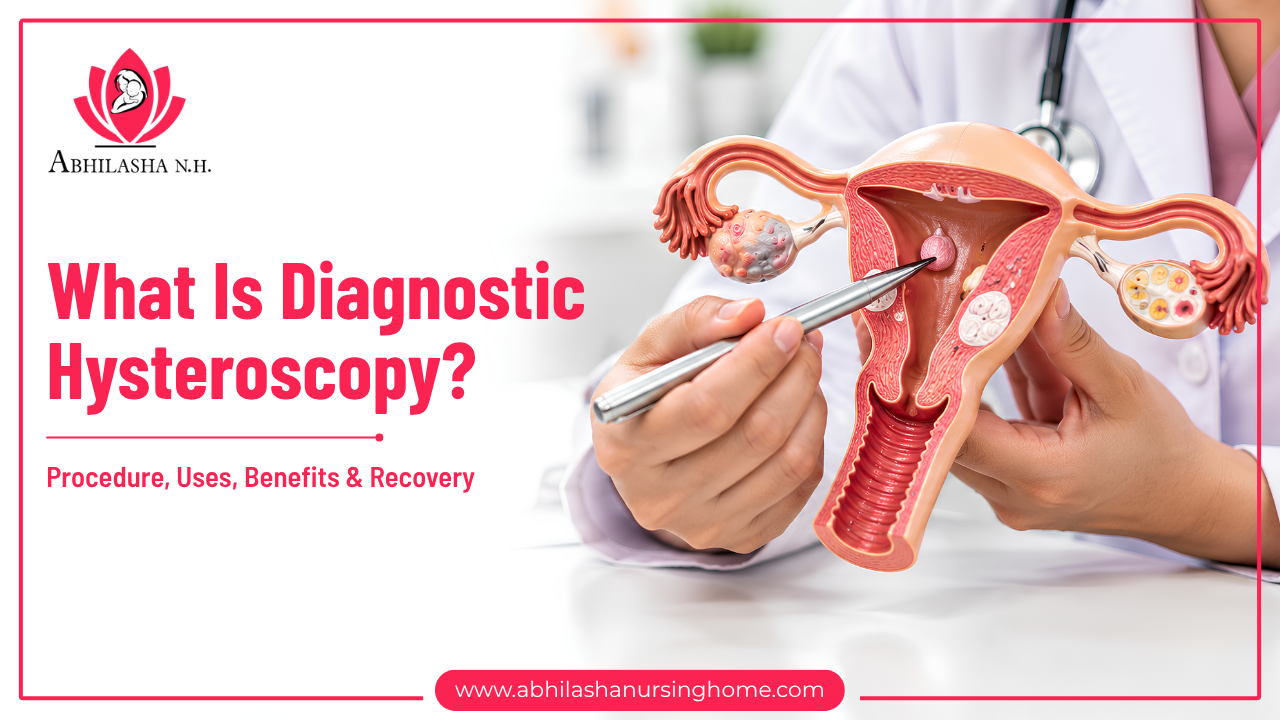
Diagnostic hysteroscopy is a procedure that allows a doctor to look directly inside the uterus to identify possible causes of gynecological symptoms. It uses a thin, lighted instrument with a camera, called a hysteroscope, to examine the uterine cavity without making any cuts on the abdomen.
Understanding how the procedure works, why it is recommended, and what recovery involves can help you feel more confident about your next steps.
What Is Diagnostic Hysteroscopy?
Diagnostic hysteroscopy is a minimally invasive gynecological procedure used to examine the inside of the uterus. The doctor gently passes a hysteroscope through the vagina and cervix into the uterus. Images are then viewed on a monitor to check the uterine lining and look for abnormalities.
Unlike laparoscopy, which examines organs inside the abdomen and pelvis through abdominal incisions, hysteroscopy allows the doctor to examine the inside of the uterus directly.
It is primarily a diagnostic procedure, although a separate or combined operative hysteroscopy may be performed if treatment is needed.
Why Is Diagnostic Hysteroscopy Done?
Your gynecologist may recommend diagnostic hysteroscopy when symptoms or other test results suggest a problem inside the uterus.
Common reasons include:
- Heavy or irregular periods: To investigate possible causes of abnormal menstrual bleeding.
- Bleeding between periods or after menopause: To examine the uterine lining for abnormalities.
- Suspected uterine polyps or fibroids: To identify growths inside the uterine cavity.
- Fertility problems: To examine the uterine cavity when an abnormality may be affecting conception.
- Repeated pregnancy loss: To investigate certain structural problems that may need further evaluation.
- Abnormal ultrasound findings: To examine a suspected uterine abnormality more closely.
- Possible scar tissue: To look for adhesions inside the uterus.
Your doctor will determine whether hysteroscopy is appropriate based on your symptoms, medical history, and previous investigations.
How Is Diagnostic Hysteroscopy Performed?
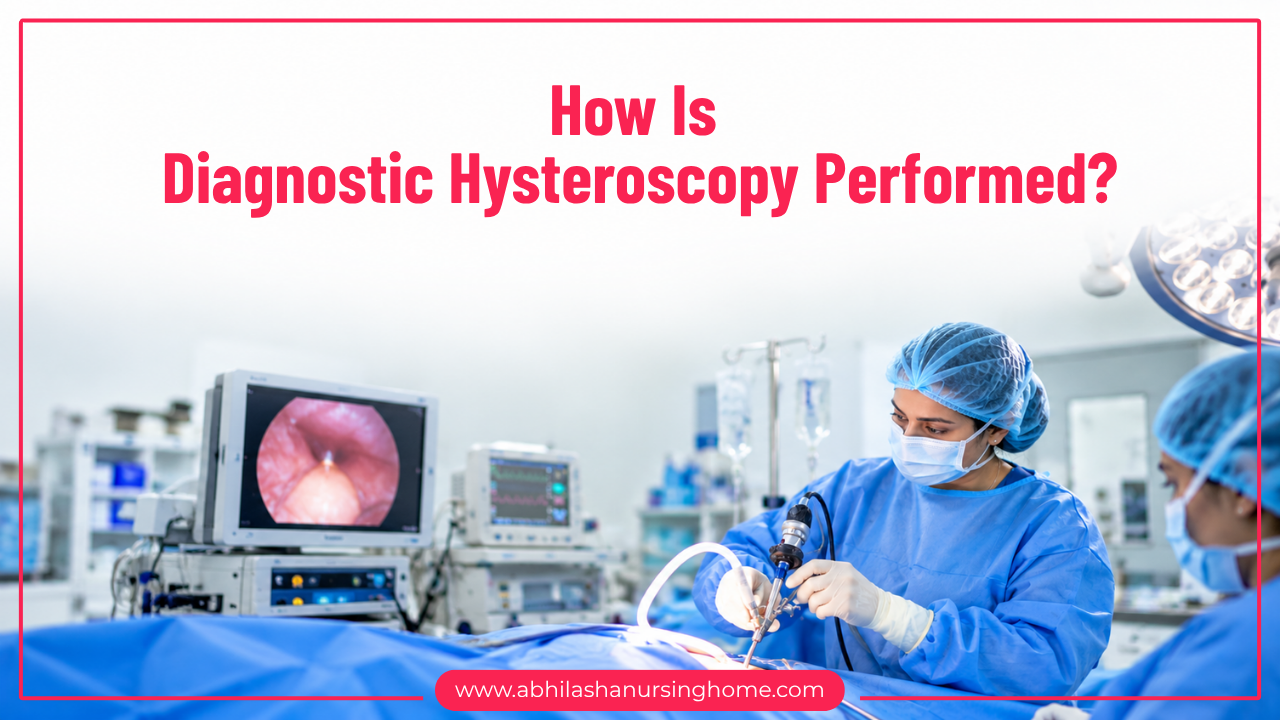
Diagnostic hysteroscopy is generally performed in a clinic, procedure room, or hospital, depending on the patient’s needs and the facilities available.
The procedure usually involves these steps:
- Preparation: Your doctor reviews your medical history, explains the procedure, and discusses pain-relief options. A pregnancy test may be required.
- Positioning: You lie on an examination table in a position similar to that used for a gynecological examination.
- Insertion of the hysteroscope: The thin instrument is gently passed through the vagina and cervix into the uterus.
- Clear visualization: A sterile fluid, usually saline, is introduced to gently expand the uterine cavity so the doctor can examine the lining more clearly.
- Examination: The doctor checks for polyps, fibroids, adhesions, or other abnormalities.
- Next steps: If further investigation or treatment is needed, your doctor will explain the available options. A biopsy or removal of an abnormality may require additional instruments or an operative procedure.
The diagnostic examination itself may take around 5–15 minutes, although the total appointment can take longer. The duration depends on the findings and the setting.
Is Diagnostic Hysteroscopy Painful?
The experience varies from person to person. Some women feel mild cramping similar to period pain, while others may experience greater discomfort during the procedure.
Pain-relief options depend on the clinical setting and individual needs. These may include pain medication, local anesthesia, sedation, or general anesthesia when appropriate.
If you have a history of painful periods, previous difficult gynecological examinations, or concerns about discomfort, discuss these with your doctor before the procedure.
What Are the Benefits of Diagnostic Hysteroscopy?
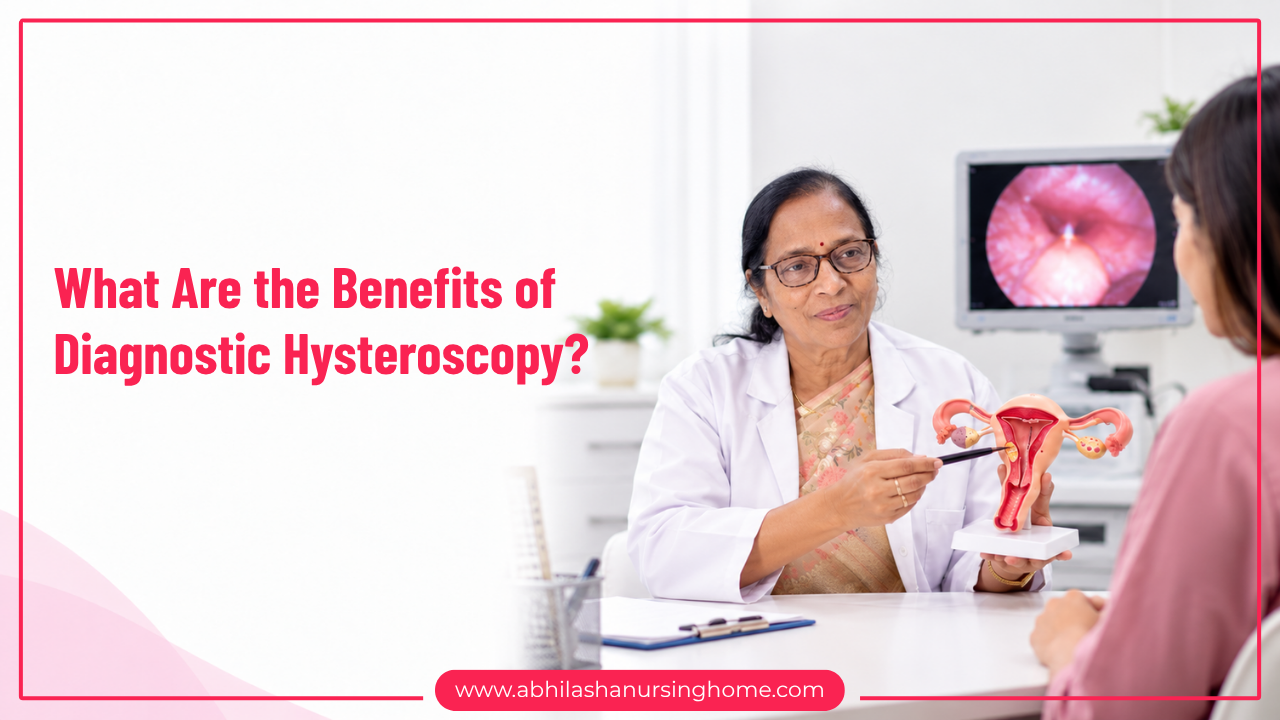
Diagnostic hysteroscopy provides a direct view of the inside of the uterus, helping doctors investigate abnormalities that may not be fully explained by an ultrasound alone.
Its potential benefits include:
- Direct examination of the uterine cavity
- Identification of certain polyps, fibroids, and adhesions
- Support in investigating abnormal uterine bleeding
- Further assessment of selected fertility-related concerns
- Guidance on whether additional treatment or testing is required
Like any medical procedure, hysteroscopy has limitations. It does not identify every possible cause of bleeding or infertility, and additional investigations may still be necessary.
What Happens After Diagnostic Hysteroscopy?
Most patients can go home shortly after an uncomplicated diagnostic hysteroscopy, depending on the pain relief or anesthesia used.
Mild abdominal cramping and light vaginal bleeding or spotting may occur for a few days. Many women return to their usual activities by the following day, although recovery varies.
Follow your doctor’s instructions about medicines, physical activity, sexual activity, and follow-up appointments.
Contact your doctor promptly if you experience heavy or increasing bleeding, severe or worsening abdominal pain, fever, chills, or unusual, foul-smelling vaginal discharge.
FAQs About Diagnostic Hysteroscopy
Q.1. Is diagnostic hysteroscopy a major surgery?
Ans. Diagnostic hysteroscopy is generally a minor, minimally invasive procedure. It does not require abdominal incisions and usually does not require an overnight hospital stay. If treatment is performed at the same time, the procedure may be more extensive.
Q.2. Is diagnostic hysteroscopy safe?
Ans. It is generally considered a safe procedure, although complications can occasionally occur. These may include infection, bleeding, or injury to the cervix or uterus. Your doctor will explain the relevant risks before proceeding.
Q.3. Can diagnostic hysteroscopy help with infertility?
Ans. It can help identify certain abnormalities inside the uterus that may be relevant to fertility, such as polyps, adhesions, or structural problems. Whether treating these findings improves the chances of pregnancy depends on the individual situation.
Q.4. Does diagnostic hysteroscopy require hospital admission?
Ans. Usually, an uncomplicated diagnostic hysteroscopy is performed without an overnight stay. The setting and observation period depend on the procedure, the pain-relief method, and your medical needs.
Final Thoughts
Diagnostic hysteroscopy helps gynecologists examine the inside of the uterus and investigate concerns such as abnormal bleeding, suspected uterine abnormalities, and selected fertility-related problems. Knowing what the procedure involves can make it easier to discuss your concerns and understand your treatment options.
If your doctor has recommended diagnostic hysteroscopy, ask why it is needed, what pain relief is available, and whether any additional procedure may be required.
At Abhilasha Nursing Home, Agra, women can consult a gynecologist to discuss their symptoms, understand their diagnostic options, and receive guidance based on their individual needs.
Disclaimer: This article is for general informational purposes only and does not replace professional medical advice, diagnosis, or treatment. The suitability, preparation, risks, and recovery associated with diagnostic hysteroscopy vary from person to person. Always follow your doctor’s advice.