
3 Months Pregnancy Guide: Reaching the third month of pregnancy is a special milestone. You’ve almost completed your first trimester, and although your baby bump may still be small, remarkable changes are taking place inside your body every day.
By now, you may be noticing more pregnancy symptoms and finding yourself filled with questions.
“Is my baby developing normally?”
“Why am I still feeling so tired?”
“Which tests should I get?”
“What is the best sleeping position during pregnancy?”
If these questions are on your mind, you’re not alone. Many women experience a mix of excitement, curiosity, and concern during the third month of pregnancy.
The good news is that your baby is growing rapidly, and many important developmental milestones are being achieved during this stage. Understanding what to expect can help you feel more confident as you prepare to enter the second trimester.
In this guide, we’ll walk you through everything you need to know about 3 months pregnancy symptoms, baby development, diet, important tests, sleeping positions, and precautions for a healthy pregnancy.
3 Months Pregnancy at a Glance
| Pregnancy Detail | Information |
| Pregnancy Month | Third Month |
| Weeks Covered | Week 9 to Week 12 |
| Baby Size | About the size of a lime |
| Baby Length | Approximately 5–6 cm |
| Baby Weight | Around 14–20 grams |
| Major Development | Organs formed, facial features developing |
| Common Symptoms | Nausea, fatigue, mood swings, frequent urination |
| Important Tests | Ultrasound, Blood Tests, NT Scan, Urine Tests |
What Happens During the Third Month of Pregnancy?
The third month of pregnancy includes weeks 9 to 12 and marks the final stage of the first trimester.
During this period, your baby’s major organs continue developing, facial features become more defined, and tiny movements begin inside the womb. Although you won’t be able to feel these movements yet, your baby is already stretching, kicking, and growing every day.
At the same time, your body continues adapting to pregnancy. Hormonal changes, increased blood volume, and a growing uterus can contribute to several physical and emotional symptoms.
Many women find reassurance in knowing that the risk of certain early pregnancy complications gradually decreases as they approach the second trimester.
Week-by-Week: What’s Happening During the Third Month?
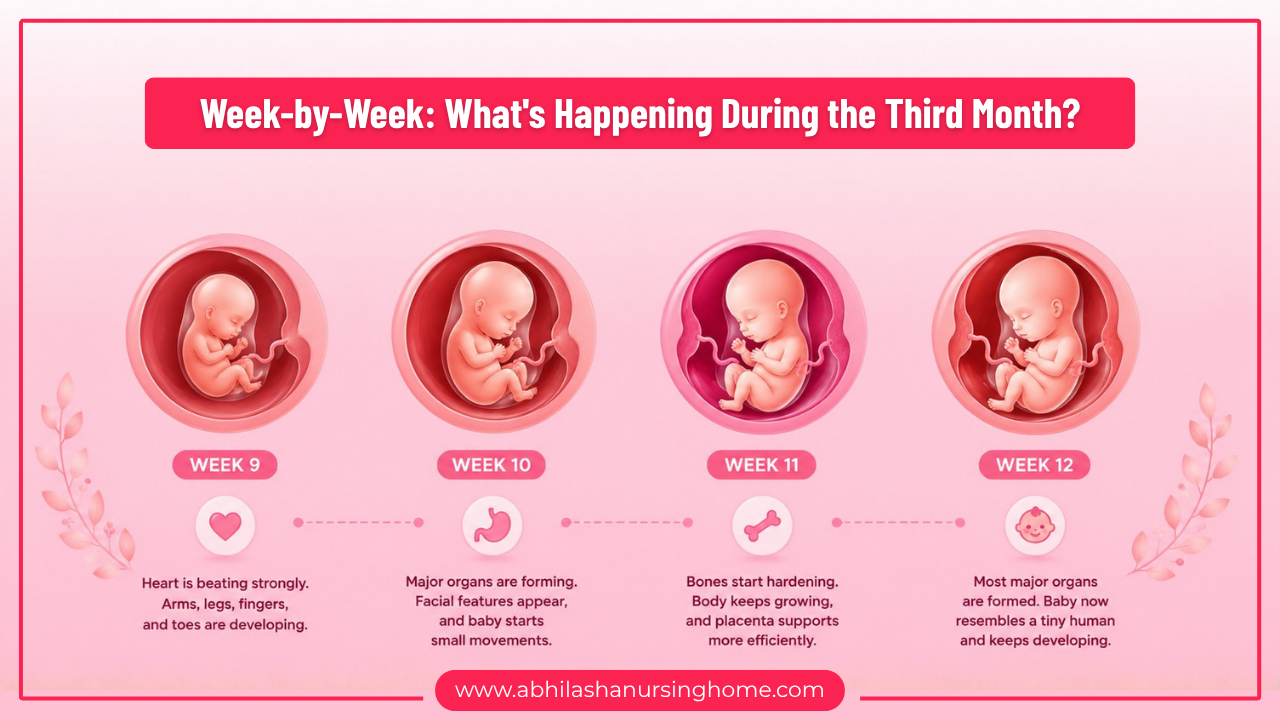
Week 9
Your baby’s heart is beating strongly, and tiny arms, legs, fingers, and toes continue developing.
Week 10
Major organs are forming rapidly. Facial features become more recognizable, and your baby begins making small movements.
Week 11
Bones start hardening, and the baby’s body continues growing longer. The placenta becomes more efficient in supporting the pregnancy.
Week 12
By the end of the third month, most major organs have formed. Your baby now resembles a tiny human and continues developing at an incredible pace.
Changes Happening in Your Body During the Third Month
As your pregnancy progresses, you may notice several physical changes.
These may include:
- A slightly thicker waistline
- Fuller and heavier breasts
- Increased appetite
- Visible veins due to increased blood circulation
- Frequent urination
- Occasional headaches or dizziness
- Increased vaginal discharge
- Continued fatigue
Although your baby bump may not be very noticeable yet, your body is actively adapting to support your growing baby.
3 Months Pregnancy Symptoms: What Can You Expect?
Every pregnancy is unique. Some women experience several symptoms, while others notice only a few.
Here are some of the most common symptoms during the third month of pregnancy.
Morning Sickness
Nausea and vomiting may still be present during the third month.
Despite being called morning sickness, it can occur at any time of the day.
Many women begin noticing gradual improvement as they near the end of the first trimester.
Tips to manage nausea:
- Eat small meals frequently
- Avoid oily, spicy, and greasy foods
- Stay hydrated
- Keep healthy snacks nearby
- Avoid long gaps between meals
Feeling Extremely Tired
Fatigue remains one of the most common pregnancy symptoms.
Your body is working continuously to support your growing baby, and increased hormone levels can
leave you feeling exhausted even after a full night’s sleep.
Helpful tips:
- Get adequate rest
- Prioritize sleep
- Avoid overexertion
- Eat balanced meals throughout the day
Frequent Urination
You may find yourself making more trips to the bathroom than usual.
Hormonal changes and increased blood flow to the kidneys are largely responsible for this symptom.
Although it can be inconvenient, it is usually a normal part of pregnancy.
Mood Swings
Feeling emotional one moment and cheerful the next is completely normal.
Pregnancy hormones can affect emotions, making mood changes more noticeable during the first trimester.
To manage emotional changes:
- Talk openly with loved ones
- Practice relaxation techniques
- Get enough sleep
- Take time for activities you enjoy
Breast Tenderness
Your breasts may feel:
- Fuller
- Heavier
- More sensitive
- Tender to touch
These changes occur because your body is preparing for breastfeeding.
Bloating and Mild Cramping
Hormonal changes can slow digestion, causing bloating and occasional discomfort.
Mild cramping is often normal as the uterus expands to accommodate your growing baby.
Are Mild Cramps During the Third Month Normal?
Many women worry when they experience cramping during pregnancy.
In most cases, mild cramping is completely normal and occurs because the uterus is stretching and adapting to the growing pregnancy.
Mild cramps that come and go are usually not a cause for concern.
However, severe abdominal pain, persistent cramping, or pain accompanied by bleeding should always be evaluated by a healthcare professional.
Baby Development at 3 Months Pregnancy
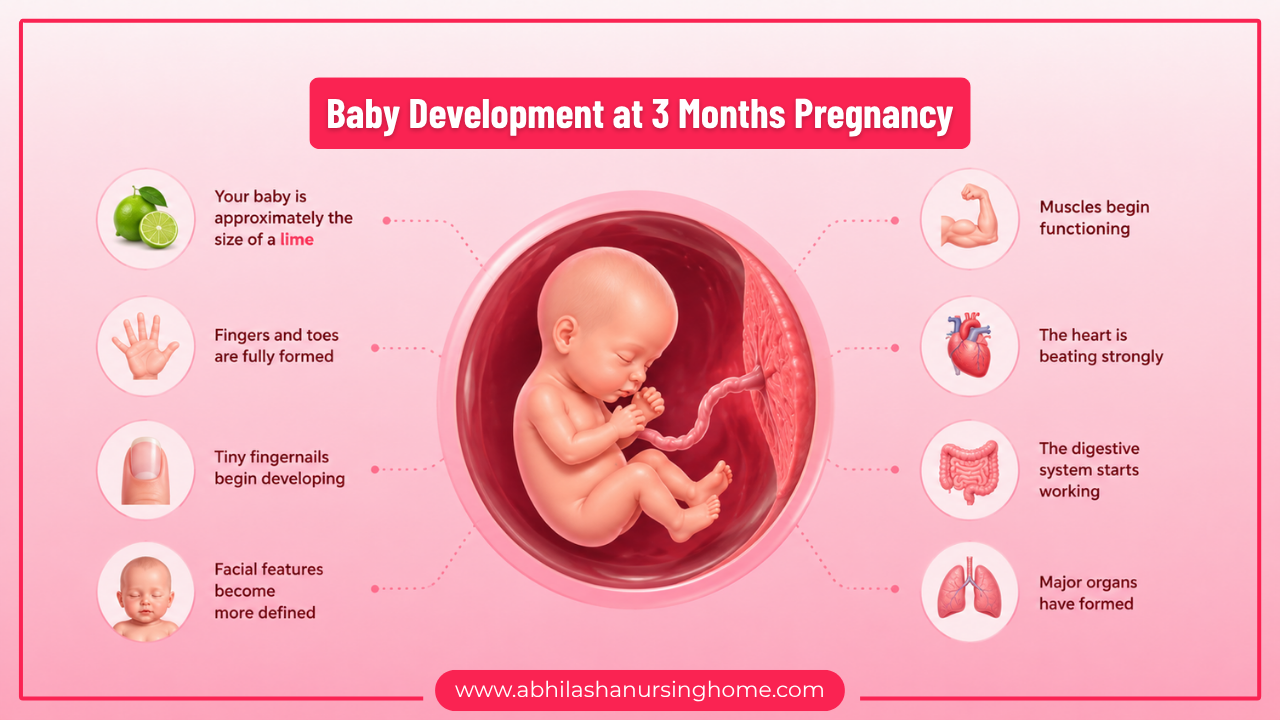
One of the most exciting parts of reaching the third month is seeing how much your baby has grown.
By the end of week 12:
- Your baby is approximately the size of a lime
- Fingers and toes are fully formed
- Tiny fingernails begin developing
- Facial features become more defined
- Muscles begin functioning
- The heart is beating strongly
- The digestive system starts working
- Major organs have formed
An important milestone during this month is that your baby transitions from being called an embryo to a fetus.
Although you cannot feel movement yet, your baby is already moving, stretching, and responding to its environment inside the womb.
Many parents are amazed to learn that by the end of the third month, their baby already looks like a tiny human.
How Big Is Your Baby at 3 Months?
By the end of the third month, your baby measures approximately 5-6 centimeters long and weighs around 14-20 grams.
That’s about the size of a lime.
Despite being so tiny, your baby’s organs, muscles, facial features, and nervous system have already made incredible progress.
What Should You Eat During the Third Month of Pregnancy?
A healthy pregnancy diet provides the nutrients your baby needs for growth while helping you maintain your own energy and well-being.
Rather than focusing on eating more, focus on eating nutritious foods.
A healthy 3-month pregnancy diet should include:
- Fresh fruits and vegetables
- Whole grains
- Protein-rich foods
- Dairy products
- Nuts and seeds
- Plenty of water
Folate-Rich Foods
Folate supports healthy brain and spinal cord development.
Include:
- Spinach
- Broccoli
- Lentils
- Beans
- Fortified cereals
Protein-Rich Foods
Protein helps build your baby’s tissues and organs. Good options include:
- Eggs
- Paneer
- Dairy products
- Lentils
- Pulses
- Chicken and fish (if advised by your doctor)
Calcium-Rich Foods
Calcium supports healthy bone and teeth development.
Choose:
- Milk
- Yogurt
- Cheese
- Almonds
- Sesame seeds
Iron-Rich Foods
Iron helps prevent anemia and supports healthy blood production.
Include:
Green leafy vegetables
Dates
Beans
Beetroot
Lean meats
Fruits and Vegetables: Excellent choices include:
- Apples
- Bananas
- Oranges
- Guava
- Pomegranate
- Pears
- Carrots
- Sweet potatoes
Foods to Avoid: During pregnancy, it is generally recommended to avoid:
- Alcohol
- Smoking and tobacco products
- Raw seafood
- Unpasteurized dairy products
- Excess caffeine
- Highly processed foods
Always follow your doctor’s dietary recommendations.
A Simple Pregnancy Diet Plan
Breakfast: Oats with milk and fresh fruit
Mid-Morning Snack: Yogurt with nuts
Lunch: Dal, roti, vegetables, and salad
Evening Snack: Fruit or roasted chana
Dinner: Protein-rich meal with vegetables and whole grains
Small, frequent meals can help reduce nausea and maintain energy levels throughout the day.
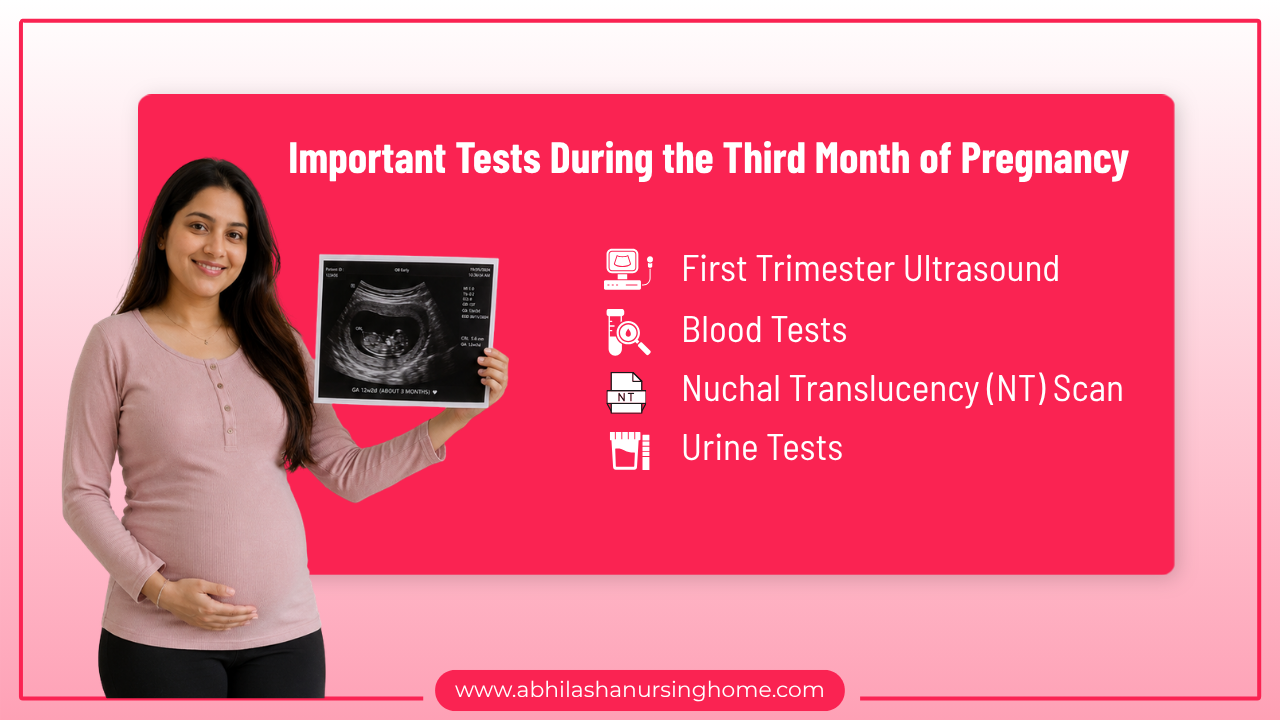
Important Tests During the Third Month of Pregnancy
Regular prenatal checkups help ensure both you and your baby remain healthy.
First Trimester Ultrasound
This scan helps:
- Confirm the pregnancy
- Check your baby’s heartbeat
- Determine your due date
- Assess growth and development
For many parents, hearing the heartbeat for the first time becomes a memorable experience.
3 Months Pregnancy Blood Tests
Your doctor may recommend tests to assess:
- Blood group and Rh factor
- Hemoglobin levels
- Blood sugar levels
- Thyroid function
- Certain infections
Nuchal Translucency (NT) Scan
Usually performed between weeks 11 and 14, the NT scan helps assess the risk of certain chromosomal conditions.
3 Months Pregnancy Urine Tests
Urine testing helps identify:
- Infections
- Sugar levels
- Protein levels
These routine investigations provide important information about your pregnancy health.
Best Sleeping Positions During 3 Months Pregnancy
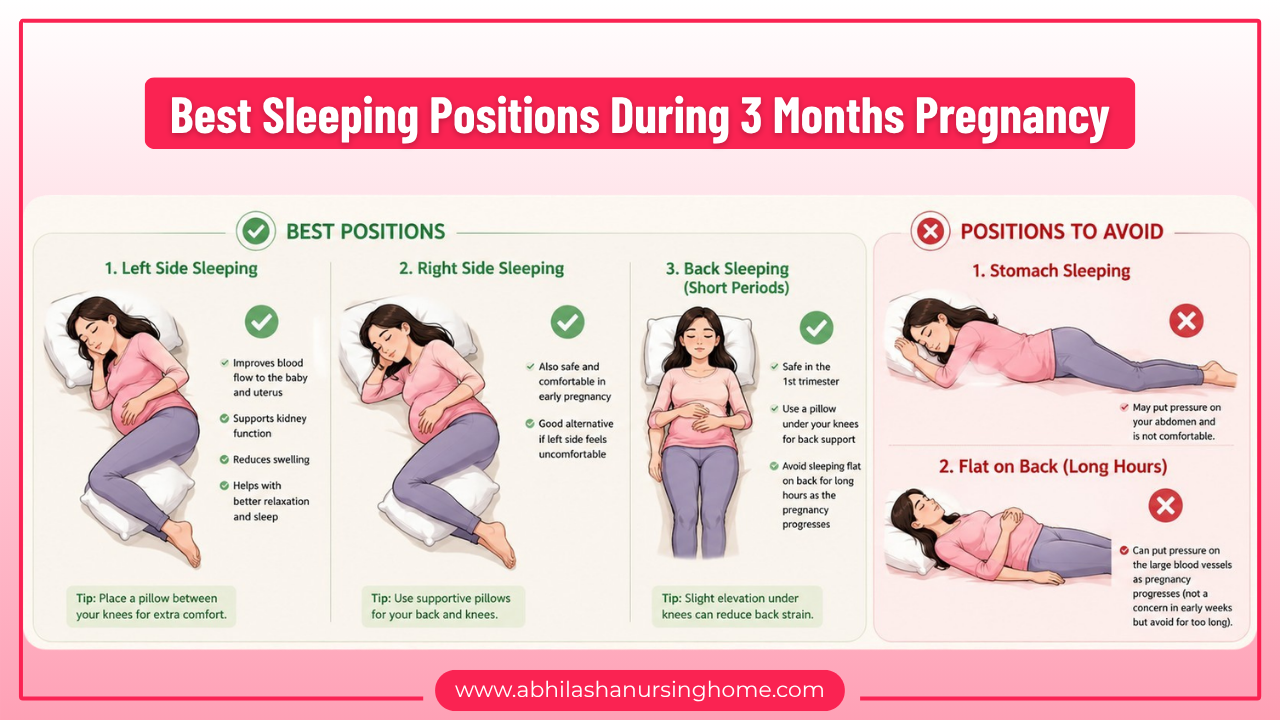
Sleep can become challenging during pregnancy, especially if symptoms like nausea, frequent urination, or anxiety interrupt your rest.
Can You Sleep on Your Back?
At 3 months pregnant, sleeping on your back is usually comfortable and considered safe for most women.
However, as pregnancy progresses, doctors often recommend gradually getting accustomed to side sleeping.
Best Sleeping Position During Pregnancy
The left-side sleeping position is often recommended because it may:
- Improve blood flow to the placenta
- Support healthy circulation
- Reduce pressure on major blood vessels
- Help improve kidney function
Don’t worry if you wake up in a different position. Simply adjust and return to a comfortable side position.
Tips for Better Sleep
To improve sleep quality:
- Use a pregnancy pillow
- Place a pillow between your knees
- Maintain a regular sleep schedule
- Avoid heavy meals before bedtime
- Limit screen time before sleeping
- Keep your bedroom cool and comfortable
Getting enough rest is beneficial for both you and your growing baby.
When Should You Contact Your Doctor?
While most symptoms are normal, certain warning signs require immediate medical attention.
Contact your healthcare provider if you experience:
- Heavy vaginal bleeding
- Severe abdominal pain
- Persistent vomiting
- High fever
- Fainting or severe dizziness
- Severe headaches
- Sudden swelling
- Difficulty breathing
Prompt medical care can help identify and manage complications early. If you are looking a Maternity Hospital In Agra, You can contact Us at +919897288991 or Visit Abhilasha Nursing Home.
Emotional Changes During the Third Month
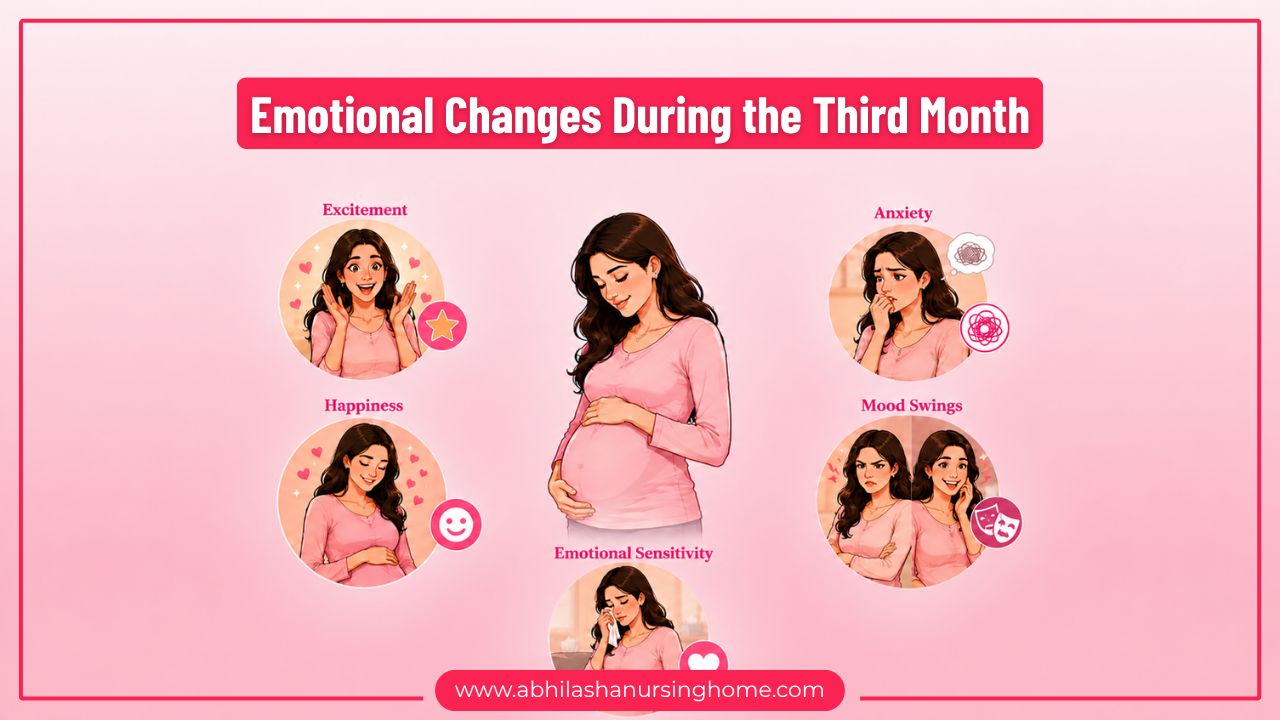
Pregnancy is not only a physical journey but also an emotional one.
During the third month, you may experience:
- Excitement
- Anxiety
- Happiness
- Mood swings
- Emotional sensitivity
These feelings are completely normal.
Be kind to yourself during this phase. Rest when needed, ask for help when necessary, and remember that adjusting to pregnancy takes time.
Every pregnancy journey is unique, and there is no “perfect” way to experience it.
Frequently Asked Questions: 3 Months Pregnancy
Q 1. Can a baby bump show at 3 months pregnant?
Ans: Yes. Some women may notice a small baby bump by the third month. However, many women do not show visibly until later in pregnancy, especially during their first pregnancy.
Q 2. Is it normal to feel tired during a 3-month pregnancy?
Ans: Yes. Fatigue is one of the most common pregnancy symptoms due to hormonal changes and the increased demands placed on your body.
Q 3. Can I travel during my 3-month pregnancy?
Ans: Most women with healthy pregnancies can travel safely during the third month. However, it is always advisable to consult your doctor before making travel plans.
Q 4. What fruits are best during a 3-month pregnancy?
Ans: Nutritious fruits include apples, bananas, oranges, guava, pomegranate, pears, and seasonal fruits rich in vitamins and fiber.
Q 5. Can I sleep on my stomach at 3 months pregnant?
Ans: If it is comfortable, sleeping on your stomach is generally safe during early pregnancy. As your abdomen grows, you may naturally prefer side sleeping.
Q 6. Is mild cramping normal during the third month?
Ans: Mild cramping can occur as the uterus expands. However, severe pain or cramping accompanied by bleeding should be evaluated by a healthcare professional.
Begin Your Pregnancy Journey with Expert Care
Regular prenatal care plays an important role in monitoring your baby’s development and supporting your health throughout pregnancy.
At Abhilasha Nursing Home, our experienced gynecologists provide:
✔ Routine pregnancy checkups
✔ Ultrasound and prenatal screening services
✔ Personalized nutrition guidance
✔ High-risk pregnancy management
✔ Comprehensive maternity care
Whether you’re entering your third month of pregnancy or planning your next prenatal visit, our team is here to support you every step of the way.
Book your prenatal consultation today at +919897288991 and take the next step toward a healthy pregnancy.
Final Thoughts: 3 Months Pregnancy
Completing a 3-month pregnancy is a significant milestone. While symptoms such as nausea, fatigue, mood swings, and frequent urination may still be present, they are often signs that your body is adapting to support your growing baby.
At this stage, your baby is developing rapidly, major organs have formed, and important milestones are being reached every day. By maintaining a healthy diet, attending prenatal appointments, getting recommended tests, and prioritizing rest, you are creating the best possible environment for your baby’s growth.
Most importantly, remember that every pregnancy is different. Some women experience many symptoms, while others experience very few. Both can be completely normal.
If you’ve recently entered your third month of pregnancy or have questions about your prenatal care, don’t hesitate to seek professional guidance. At Abhilasha Nursing Home, our experienced gynecologists are dedicated to providing compassionate pregnancy care, expert prenatal guidance, and personalized support to help you enjoy a healthy and confident pregnancy journey.
Disclaimer: This article is intended for informational purposes only and should not replace professional medical advice, diagnosis, or treatment. Always consult your healthcare provider regarding any pregnancy-related concerns.