
Finding out you’re pregnant is one of life’s most exciting moments. Along with the joy comes a lot of questions, especially about food.
“What should I eat now?”
“Is my regular Indian diet enough?”
“Which foods are good for my baby’s growth?”
“What should I avoid during the first three months?”
If you’re asking these questions, you’re not alone. The first trimester (1 to 3 months of pregnancy) is one of the most important stages of your pregnancy because your baby’s brain, spinal cord, heart, and other major organs begin developing during this time.
While you don’t need to “eat for two,” you do need to make healthy food choices that provide the nutrients your growing baby needs. A balanced Indian diet, rich in proteins, vitamins, minerals, healthy fats, and fiber, can support both your baby’s development and your own health.
In this guide, we’ll share a practical 1 to 3 months pregnancy diet chart Indian, explain the best foods to eat, foods to avoid, important nutrients, meal planning tips, and answer common questions to help you enjoy a healthy first trimester.
Why Is Nutrition Important During the First 3 Months of Pregnancy?
The first trimester is a period of rapid growth and development. Although your baby is still tiny, vital organs such as the brain, heart, spinal cord, eyes, and limbs begin forming during these early weeks.
A nutritious diet during this stage helps:
- Support your baby’s healthy growth and development
- Reduce the risk of certain birth defects
- Maintain your energy levels
- Strengthen your immune system
- Reduce the risk of nutritional deficiencies
- Support healthy weight gain
- Help manage common pregnancy symptoms like nausea and fatigue
Even if morning sickness affects your appetite, eating small, nutritious meals throughout the day can make a big difference.
Essential Nutrients During 1 to 3 Months of Pregnancy
Your body needs several key nutrients during the first trimester.
Folic Acid: Folic acid is one of the most important nutrients during early pregnancy. It supports the healthy development of your baby’s brain and spinal cord and helps reduce the risk of neural tube defects.
Food Sources: Spinach, Broccoli, Lentils, Green peas, and Fortified cereals. Your doctor will also recommend a folic acid supplement.
Protein: Protein helps build your baby’s tissues, muscles, and organs. Good Indian Sources are Dal, Paneer, Milk, Curd, Eggs, Chicken, Fish (well-cooked and as advised by your doctor), Soybeans, and Sprouts.
Iron: Iron supports healthy blood production and helps prevent anemia during pregnancy. It Include Spinach, Beetroot, Dates, Raisins, Lentils, Chickpeas, and Green leafy vegetables. Pair iron-rich foods with vitamin C-rich fruits like oranges or amla for better absorption.
Calcium: Calcium is essential for your baby’s developing bones and teeth. Good Sources of calcium are Milk, Curd, Cheese, Paneer, Ragi, and Sesame seeds.
Vitamin D: Vitamin D helps your body absorb calcium and supports bone health. Sources include: Morning sunlight, Fortified, dairy products, Eggs, and Fatty fish (if advised by your Gynecologist).
Fiber: Fiber helps prevent constipation, a common problem during pregnancy. Whole grains, Fruits, Vegetables, Oats, and Brown rice are fiber rich foods.
1 to 3 Months Pregnancy Diet Chart (Indian)
The following sample diet chart provides balanced nutrition while being easy to follow. You can adjust it according to your preferences, dietary restrictions, and your doctor’s advice.
| Time | Meal | Suggested Foods |
| Early Morning | Empty stomach | Warm water or milk, 4-5 soaked almonds, 1-2 walnuts |
| Breakfast | Healthy breakfast | Vegetable poha, oats, upma, idli with sambar, or stuffed vegetable paratha with curd |
| Mid-Morning Snack | Light snack | Seasonal fruit such as apple, banana, orange, guava, or pomegranate |
| Lunch | Balanced meal | 2 whole wheat rotis, dal, seasonal vegetables, salad, curd |
| Evening Snack | Healthy snack | Roasted chana, sprouts chaat, buttermilk, coconut water, or fruit |
| Dinner | Light meal | Dal with rice, vegetable khichdi, paneer curry with roti, or vegetable pulao with curd |
| Bedtime | Before sleep | Warm milk (if recommended by your doctor) |
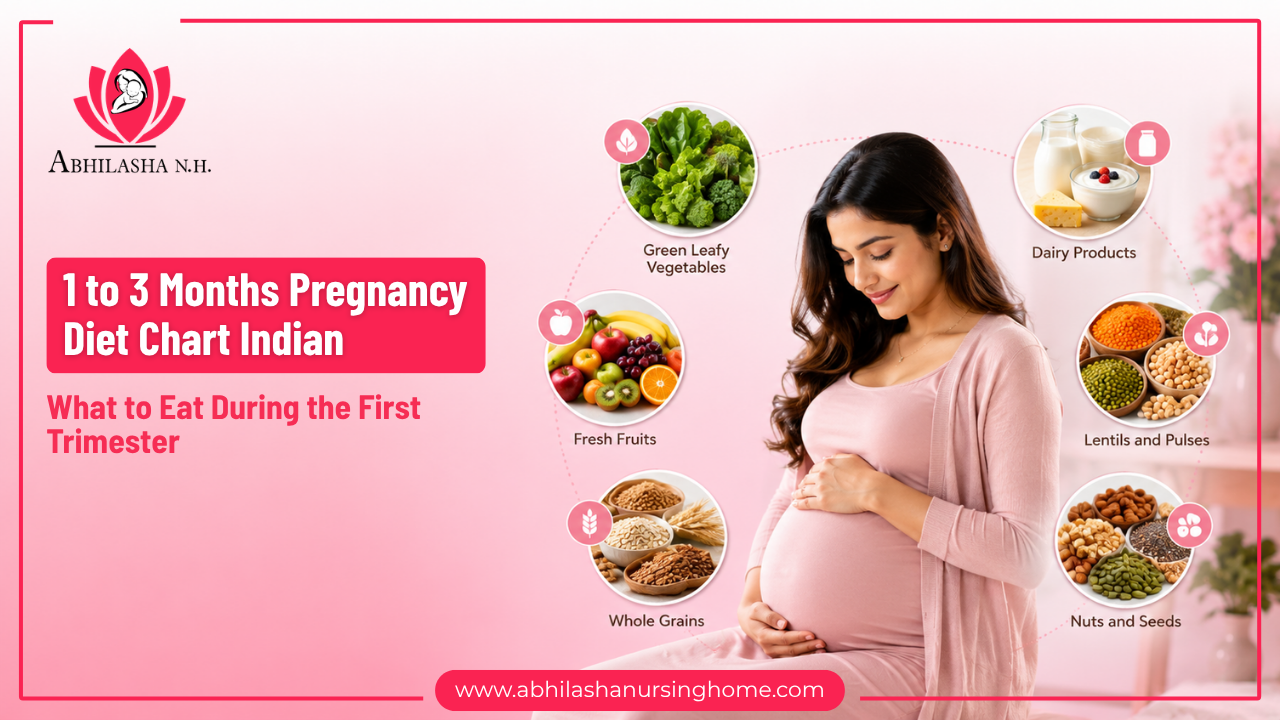
Best Indian Foods to Eat During the First Trimester
A balanced Indian diet naturally includes many nutrient-rich foods that support a healthy pregnancy.
Green Leafy Vegetables
Vegetables such as spinach, fenugreek (methi), and amaranth provide folate, iron, calcium, and fiber.
Fresh Fruits
Include a variety of seasonal fruits such as:
- Apples
- Bananas
- Oranges
- Guava
- Pears
- Pomegranate
- Papaya (ripe papaya in moderate amounts is generally considered safe, but always follow your doctor’s advice)
- Mangoes (seasonal and in moderation)
Fruits provide vitamins, antioxidants, and hydration.
Whole Grains
Whole grains provide steady energy and fiber.
Choose:
- Whole wheat roti
- Oats
- Brown rice
- Millet (Bajra, Jowar, Ragi)
Dairy Products
Milk, curd, paneer, and cheese provide calcium, protein, and probiotics that support digestion.
Lentils and Pulses
Dal, rajma, chole, moong dal, and other legumes are excellent vegetarian protein sources.
Nuts and Seeds
Healthy fats support your baby’s brain development.
Include:
- Almonds
- Walnuts
- Pumpkin seeds
- Flaxseeds
- Chia seeds
- Consume them in moderation.
Foods to Avoid During the First 3 Months of Pregnancy
Some foods carry a higher risk of foodborne illness or may not be suitable during pregnancy.
Avoid:
- Alcohol
- Smoking and tobacco products
- Raw or undercooked eggs
- Raw seafood
- Unpasteurized milk and dairy products
- Excess caffeine (limit as advised by your doctor)
- Highly processed foods
- Street food prepared under unhygienic conditions
- Raw sprouts unless thoroughly cooked
Always wash fruits and vegetables properly before eating.
Managing Morning Sickness Through Diet
Morning sickness is common during the first trimester, but small dietary changes can help reduce nausea.
Try these tips:
- Eat small meals every 2–3 hours.
- Avoid an empty stomach.
- Choose bland foods such as toast or crackers if nausea is severe.
- Drink water between meals rather than with meals.
- Avoid oily, spicy, or greasy foods if they worsen symptoms.
- Ginger tea or ginger in moderation may help, after discussing it with your doctor.
Remember, morning sickness usually improves after the first trimester for many women.
Hydration During Early Pregnancy
Staying hydrated is just as important as eating nutritious foods.
Aim for 8-10 glasses of water daily, unless your doctor advises otherwise.
You can also include:
- Coconut water
- Lemon water
- Buttermilk
- Fresh homemade soups
Avoid sugary soft drinks and excessive packaged fruit juices.
Safe Eating Tips During Pregnancy
To reduce the risk of infections and foodborne illnesses:
- Eat freshly prepared meals.
- Wash fruits and vegetables thoroughly.
- Store food properly.
- Cook meat, eggs, and seafood completely.
- Avoid leftover food that has been kept at room temperature for long periods.
- Maintain good kitchen hygiene.
Lifestyle Tips for a Healthy First Trimester
A healthy pregnancy is about more than just diet.
Along with eating nutritious foods:
- Take prenatal vitamins as prescribed.
- Get enough rest.
- Stay physically active with gentle walking if your doctor approves.
- Avoid self-medication.
- Attend all prenatal checkups.
- Manage stress through relaxation techniques or light activities you enjoy.
Common Diet Mistakes to Avoid
Many women unknowingly make dietary mistakes during early pregnancy.
Avoid:
- Skipping meals because of nausea
- Eating for two
- Depending heavily on packaged foods
- Drinking too much caffeine
- Taking supplements without medical advice
- Following restrictive diets
If you’re struggling to eat because of persistent nausea or vomiting, consult your healthcare provider.
Frequently Asked Questions About 1 to 3 Months Pregnancy Diet
Q 1. What is the best Indian diet during the first three months of pregnancy?
Ans: A balanced diet including whole grains, fruits, vegetables, lentils, dairy products, nuts, and protein-rich foods is ideal for supporting healthy pregnancy.
Q 2. Which fruits are good during early pregnancy?
Ans: Apples, bananas, oranges, guava, pears, pomegranate, and seasonal fruits are nutritious choices.
Q 3. Can I drink milk during pregnancy?
Ans: Yes. Milk is an excellent source of calcium and protein unless you have lactose intolerance or your doctor advises otherwise.
Q 4. Is coconut water safe during pregnancy?
Ans: Yes. Coconut water is generally considered a healthy hydrating drink during pregnancy when consumed in moderation.
Q 5. Can I skip meals if I have morning sickness?
Ans: It’s better to eat small, frequent meals instead of skipping meals altogether. An empty stomach may worsen nausea.
Q 6. How much water should I drink during pregnancy?
Ans: Most pregnant women should aim for 8–10 glasses of water daily, unless advised differently by their healthcare provider.
Final Thoughts About 1 to 3 Months Pregnancy Diet
The first three months of pregnancy are an important time for your baby’s growth and development. Following a balanced Indian pregnancy diet rich in protein, iron, calcium, folic acid, vitamins, and fiber can help support a healthy pregnancy while keeping you energized.
Remember, every pregnancy is different. You don’t need a complicated meal plan-simple, home-cooked, nutritious Indian meals are often the best choice. Eat a variety of foods, stay hydrated, take your prenatal supplements as prescribed, and attend regular prenatal checkups.
If you’re unsure about your diet or have concerns about your nutritional needs, don’t hesitate to seek professional guidance. At Abhilasha Nursing Home, our experienced gynecologists provide personalized prenatal care, nutritional counseling, and pregnancy guidance to help you and your baby stay healthy throughout every stage of pregnancy.
Understand Your First Trimester Pregnancy Months in Detail:
Disclaimer: This article is intended for informational purposes only and should not replace professional medical advice, diagnosis, or treatment. Always consult your healthcare provider regarding your diet and any pregnancy-related concerns.