
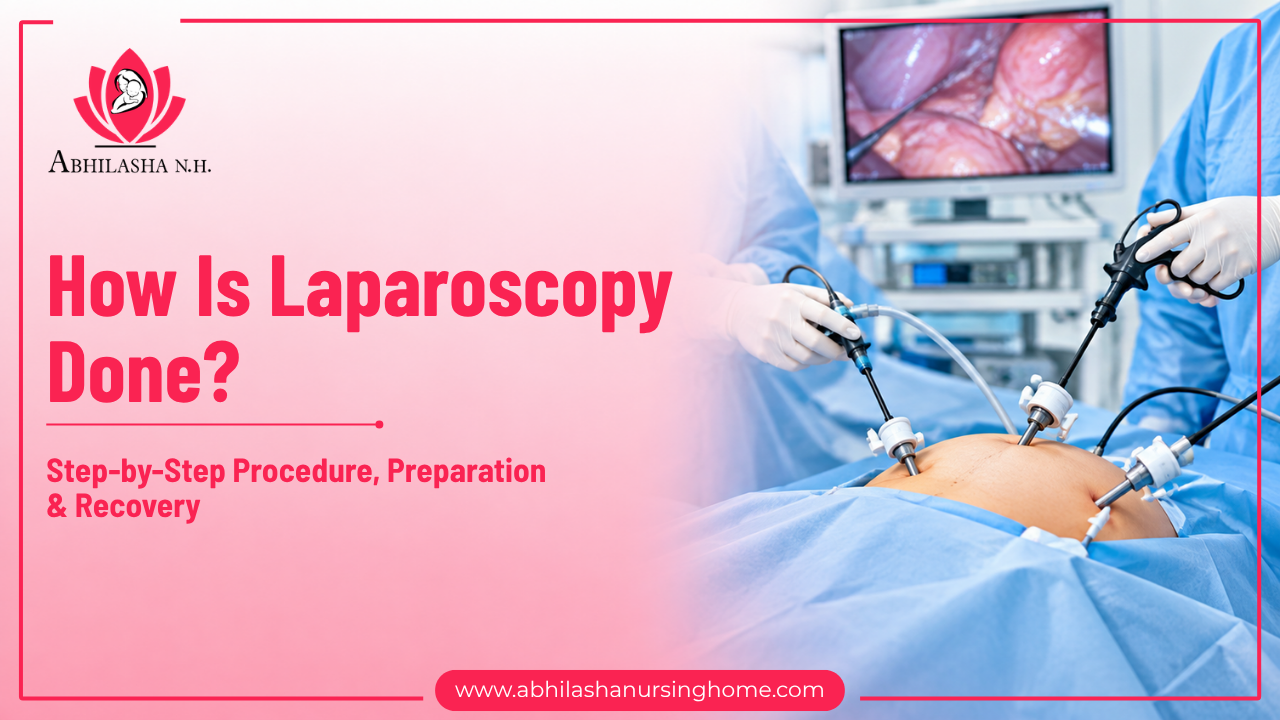
If your doctor has recommended laparoscopy, you may have several questions about the procedure: How is laparoscopy done? Is it painful? What happens before surgery? How long does it take? And what can you expect during recovery?
Laparoscopy is a minimally invasive surgical procedure that allows a doctor to examine or treat organs inside the abdomen or pelvis through small incisions. It is commonly used in gynaecology for conditions involving the uterus, ovaries, fallopian tubes, endometriosis, fibroids, infertility, and other pelvic conditions.
Unlike traditional open surgery, laparoscopy generally involves smaller incisions. The exact steps depend on the reason for the procedure and the treatment being performed.
What Is Laparoscopy?
Laparoscopy is a surgical technique in which a thin, lighted instrument called a laparoscope is inserted through a small incision in the abdomen.
The laparoscope has a camera that allows the surgeon to view the internal organs on a monitor. If treatment is required, the surgeon can insert small surgical instruments through additional small incisions.
Depending on the patient’s condition, laparoscopy may be used for diagnosis, treatment, or both.
How Is Laparoscopy Done?
The procedure generally involves several steps. Your doctor will explain the specific process based on your medical condition and the type of laparoscopic surgery planned.
1. Pre-Surgery Preparation
Before laparoscopy, your doctor may review your medical history, current medicines, allergies, previous surgeries, and any existing health conditions.
You may also need certain tests, depending on your age, health, and the type of surgery. Your doctor will tell you when to stop eating and drinking before the procedure and whether any regular medicines need to be adjusted.
It is important to follow these instructions carefully.
2. Anaesthesia Is Given
Laparoscopy is commonly performed under general anaesthesia, which means you will be asleep during the procedure and should not feel the surgery itself.
An anaesthesia specialist will monitor you throughout the operation to help keep you safe and comfortable.
3. A Small Incision Is Made
Once you are under anaesthesia, the surgeon makes a small incision, often near the belly button.
Through this incision, the laparoscope is carefully inserted into the abdomen.
4. The Abdomen Is Inflated With Gas
A small amount of carbon dioxide gas is introduced into the abdomen to create space between the abdominal wall and the internal organs.
This gives the surgeon a clearer view and allows the laparoscope and surgical instruments to be used safely.
The gas is removed at the end of the procedure.
5. The Laparoscope Provides a Clear View
The laparoscope contains a camera and light. It sends images of the abdominal or pelvic organs to a monitor in the operating room.
This allows the surgeon to examine areas such as the uterus, ovaries, fallopian tubes, and surrounding tissues, depending on the reason for surgery.
If laparoscopy is being performed for diagnosis, the surgeon may examine the organs for abnormalities such as endometriosis, cysts, adhesions, or other conditions.
6. Additional Small Incisions May Be Made
If treatment is required, the surgeon may make one or more additional small incisions.
Small surgical instruments can then be inserted through these openings. The number and location of incisions depend on the procedure being performed.
For example, laparoscopic surgery may be used for procedures such as laparoscopic hysterectomy, myomectomy, treatment of endometriosis, removal of certain ovarian cysts, or other gynaecological surgeries.
7. The Required Procedure Is Performed
The surgeon performs the planned treatment using the laparoscope and specialised instruments.
Because the surgeon can view the operating area on a magnified monitor, the procedure can be performed through relatively small abdominal openings.
The exact surgical steps vary significantly depending on the condition being treated.
8. The Instruments and Gas Are Removed
Once the procedure is complete, the surgical instruments and laparoscope are removed.
The carbon dioxide gas is also released from the abdomen as much as possible.
9. The Incisions Are Closed
The small abdominal incisions are closed using appropriate sutures, surgical glue, or other closure methods depending on the location and type of incision.
Dressings may then be placed over the incision sites.
How Long Does Laparoscopy Take?
The duration of laparoscopy varies depending on the reason for surgery and the complexity of the procedure.
A diagnostic laparoscopy may take less time than a laparoscopic procedure involving treatment. Your surgeon can give you a better estimate after assessing your condition and planned surgery.
The total time spent at the hospital may be longer than the actual operation because it also includes preparation, anaesthesia, and recovery after surgery.
Is Laparoscopy Painful?
You should not feel pain during the procedure because anaesthesia is used.
After surgery, some patients experience temporary discomfort, including:
- Abdominal soreness
- Tenderness around the incision sites
- Bloating
- Mild nausea
- Tiredness
- Shoulder-tip discomfort caused by the carbon dioxide gas used during surgery
The amount of discomfort varies from person to person. Your doctor may recommend appropriate pain-relieving medication and provide instructions for recovery.
What Happens After Laparoscopy?
After the procedure, you will be taken to a recovery area where your vital signs and recovery from anaesthesia can be monitored.
Depending on the type of surgery and your overall condition, you may be able to go home the same day or may need to stay in the hospital for observation.
Your doctor will provide instructions regarding:
- Wound care
- Medicines
- Eating and drinking
- Physical activity
- Bathing
- Work and daily activities
- Follow-up appointments
Gentle movement may be encouraged when appropriate, while strenuous exercise and heavy lifting should generally be avoided until your doctor advises that it is safe.
What Are the Benefits of Laparoscopy?
Laparoscopy is considered minimally invasive because it generally uses smaller incisions than traditional open abdominal surgery.
Depending on the procedure, potential benefits may include:
- Smaller surgical incisions
- Less incision-related discomfort
- Reduced scarring
- Earlier mobility
- Shorter hospital stay in many cases
- Faster return to routine activities for some patients
However, the benefits and recovery experience depend on the specific procedure and individual health condition.
When Should You Contact Your Doctor After Laparoscopy?
Some discomfort after surgery can be expected, but certain symptoms require medical attention.
Contact your doctor if you experience:
Severe or worsening abdominal pain
- Fever or chills
- Heavy bleeding
- Persistent vomiting
- Increasing redness, swelling, or discharge from an incision
- Difficulty breathing
- Severe dizziness, weakness, or fainting
- Do not ignore symptoms that feel unusual or significantly worse than what your doctor told you to expect.
Contact Abhilasha Nursing Home if you are looking for a Maternity Hospital in Agra.
FAQs About How Laparoscopy Is Done
Q 1. Is the patient awake during laparoscopy?
Laparoscopy is commonly performed under general anaesthesia, so the patient is asleep during the procedure. The type of anaesthesia used will be decided by the medical team based on the surgery and the patient’s health.
Q 2. How many cuts are made during laparoscopy?
The number of incisions depends on the type of laparoscopic procedure. A diagnostic procedure may require fewer incisions, while more complex surgery may require additional small openings for surgical instruments.
Q 3. How long does it take to recover from laparoscopy?
Recovery varies depending on the type of procedure and individual healing. Some patients return to normal activities relatively quickly, while more complex surgeries may require a longer recovery period.
Q 4. Is laparoscopy safer than open surgery?
Laparoscopy is a commonly used minimally invasive surgical approach, but every surgery has potential risks. Whether it is appropriate depends on the patient’s condition, the planned procedure, and the surgeon’s assessment.
Final Thoughts on How Laparoscopy Is Done
Understanding how laparoscopy is done can make the procedure feel less unfamiliar and help you prepare for what to expect. From anaesthesia and small abdominal incisions to the use of a camera and specialised instruments, each step is carefully planned according to the patient’s condition and treatment needs.
If your doctor has recommended laparoscopy, discuss your concerns about the procedure, anaesthesia, recovery, and possible risks with your gynaecologist before surgery.
At Abhilasha Nursing Home, Agra, patients can consult with a gynaecologist to understand their condition, available treatment options, and whether laparoscopic surgery is appropriate for them.
Disclaimer: This article is for general informational purposes only and does not replace professional medical advice, diagnosis, or treatment. The exact laparoscopic procedure, anesthesia, recovery time, and risks vary depending on the patient’s condition and the type of surgery. Always follow the instructions provided by your treating doctor.