
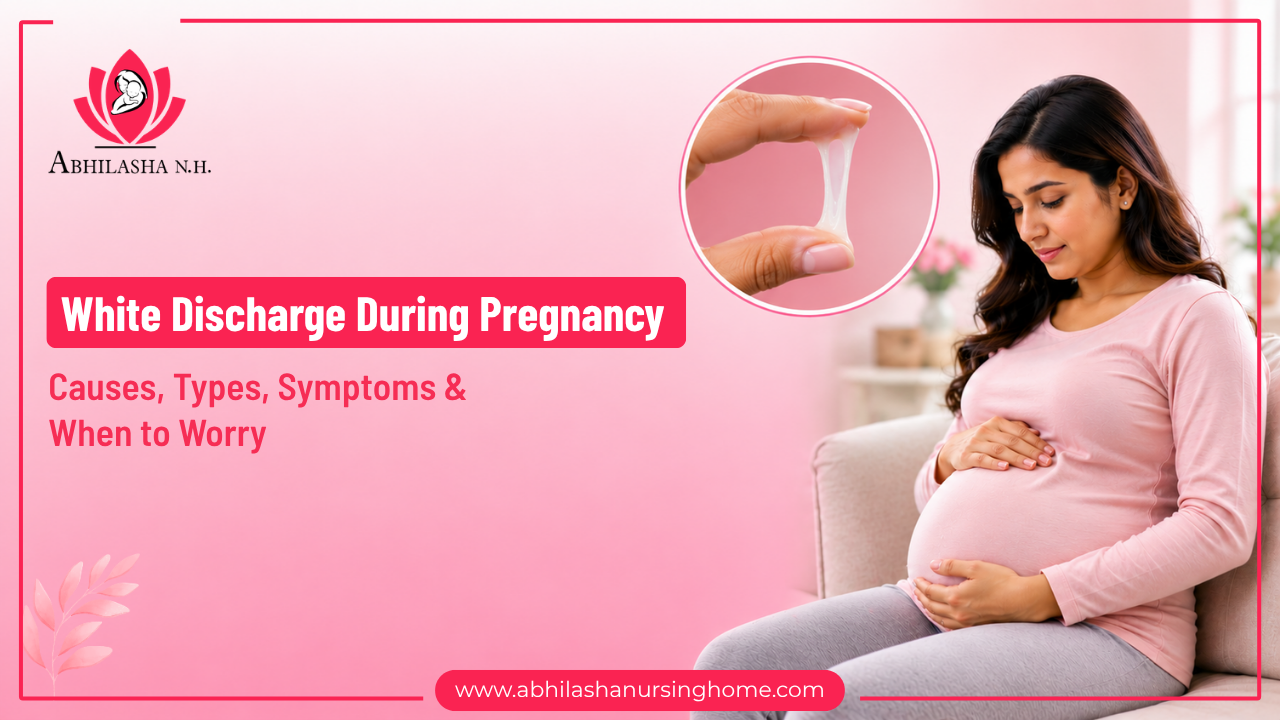
Medically Reviewed by: Obstetrics & Gynecology Team, Abhilasha Nursing Home
Pregnancy brings many physical and hormonal changes, and one of the most common changes women notice is white discharge during pregnancy. While an increase in vaginal discharge can sometimes feel concerning, it is usually a normal part of a healthy pregnancy.
This discharge, medically known as leukorrhea, is generally thin, milky white, creamy, or slightly sticky and may increase as pregnancy progresses. It happens mainly because of hormonal changes, particularly rising estrogen levels, along with increased blood flow to the pelvic region.
For many women, white discharge may even become noticeable before a missed period. However, not every type of discharge is normal. Changes in color, smell, consistency, or discharge associated with itching, burning, pain, bleeding, or continuous watery leakage may require medical evaluation.
In this guide, we will explain what white discharge during pregnancy means, its common causes, different types, changes during each trimester, early pregnancy discharge, warning signs, hygiene tips, and when you should consult a gynecologist.
White Discharge During Pregnancy at a Glance?
| Topic | Quick Answer |
| Medical Term | Leukorrhea |
| Is White Discharge Normal? | Yes, in most healthy pregnancies |
| Normal Color | Clear or milky white |
| Normal Smell | Mild or odorless |
| Normal Texture | Thin, creamy, or slightly sticky |
| Common Causes | Hormonal changes and increased blood flow |
| When to See a Doctor | Yellow, green, gray, foul-smelling, bloody discharge or discharge with pain, itching, or burning |
Is White Discharge an Early Sign of Pregnancy?
Increased white discharge can be one of the early physical changes associated with pregnancy. Rising pregnancy hormones stimulate the cervix and vaginal glands to produce more mucus.
However, white discharge alone cannot confirm pregnancy. If you suspect that you may be pregnant, a pregnancy test after a missed period is a more reliable way to confirm pregnancy.
What Is White Discharge During Pregnancy?
White discharge during pregnancy, or leukorrhea, is vaginal discharge that commonly increases during pregnancy. It is produced by the cervix and vaginal glands as the body responds to hormonal changes and increased blood circulation around the reproductive organs.
This discharge has an important protective role. It helps:
- Keep the vagina clean
- Remove dead cells and bacteria
- Maintain a healthy vaginal environment
- Support the natural balance of vaginal bacteria
- Reduce the risk of infections reaching the uterus
As pregnancy progresses, the amount of discharge may gradually increase. Some women notice only a small amount, while others may need to change their underwear more frequently or use a panty liner.
Both experiences can be normal because every pregnancy is different.
Is White Discharge Normal During Pregnancy?
Yes. White discharge during pregnancy is usually normal, particularly when it is clear or milky white, has little or no smell, and does not cause discomfort.
Normal pregnancy discharge is generally:
- Clear or milky white
- Thin, creamy, or slightly sticky
- Smooth in texture
- Mild-smelling or odorless
- Free from itching and burning
- Not associated with pain
- Likely to increase gradually during pregnancy
Hormonal changes cause the cervix and vaginal walls to produce more secretions. Increased blood flow to the pelvic area can also contribute to greater vaginal moisture.
Therefore, simply noticing more discharge does not necessarily mean that something is wrong.
However, it is important to monitor changes. A strong odor, unusual color, cottage-cheese-like texture, severe itching, burning, bleeding, or continuous watery leakage should not be ignored.
Types of White Discharge During Pregnancy
White discharge can look different at different stages of pregnancy. Its consistency may also vary depending on hormonal changes and the natural vaginal environment.
1. Normal Milky White Discharge
This is the most common form of leukorrhea during pregnancy.
It is generally:
- Milky white
- Thin or slightly creamy
- Smooth
- Mild-smelling or odorless
When there is no itching, burning, pain, or irritation, this type of discharge is generally considered normal.
2. Watery White Discharge
Some pregnant women experience thin or watery discharge, particularly as pregnancy progresses.
Increased estrogen levels, blood flow, and vaginal secretions can contribute to this change.
Watery discharge is often normal, but there is an important exception. A sudden gush of clear fluid or continuous watery leakage, especially during the third trimester, can indicate leakage of amniotic fluid. In such a situation, contact your healthcare provider immediately.
3. Thick White Discharge
White discharge can sometimes become thicker because hormonal changes affect cervical mucus.
If it remains white, smooth, odorless, and does not cause itching or irritation, it may still be normal.
However, thick discharge that looks like cottage cheese can be associated with a yeast infection and should be evaluated by a healthcare professional.
4. Creamy White Discharge
Creamy or lotion-like discharge is another common variation of leukorrhea. It may become more noticeable during the second trimester.
It is generally considered normal when it remains:
- White
- Smooth
- Mild-smelling
- Free from itching or burning
5. Sticky or Mucus-Like Discharge
As pregnancy progresses, cervical mucus production increases. Discharge may therefore become sticky, elastic, thick, or jelly-like.
Toward the end of pregnancy, some women may notice the mucus plug, which can appear as thick mucus that is clear, white, pink, or slightly blood-tinged.
Losing the mucus plug can indicate that the body is preparing for labor, although it does not necessarily mean that labor will begin immediately.
Causes of White Discharge During Pregnancy
Several natural changes during pregnancy can increase vaginal discharge.
Hormonal Changes
Rising levels of pregnancy hormones, especially estrogen and progesterone, are one of the main causes of increased discharge.
These hormones stimulate the cervix and vaginal tissues to produce more secretions. The discharge helps maintain a healthy vaginal environment and supports the body’s natural protection against infections.
Increased Blood Flow
Pregnancy causes an increase in blood circulation throughout the body. More blood reaches the uterus, cervix, and vaginal tissues.
This increased circulation can make vaginal tissues more active and contribute to:
- Increased moisture
- Greater vaginal secretions
- More frequent discharge
- A feeling of dampness
These changes are especially noticeable for some women during the second and third trimesters.
Increased Cervical Mucus
The cervix produces mucus throughout pregnancy. This mucus helps create a protective barrier between the vagina and uterus.
As pregnancy progresses, cervical mucus production may increase, which can make discharge heavier or thicker.
Formation of the Mucus Plug
During pregnancy, thick mucus collects in the cervix and forms the mucus plug. It acts as a protective barrier and helps prevent bacteria from entering the uterus.
Near the end of pregnancy, the mucus plug may begin to come away. It may look thick, sticky, jelly-like, clear, white, pink, or slightly blood-tinged.
White Discharge During Pregnancy by Trimester
The amount and consistency of discharge can change throughout pregnancy.
First Trimester
During the first trimester, hormonal changes and increased blood flow to the reproductive organs can increase vaginal secretions.
Normal discharge during this period may be:
- Thin
- Milky white
- Slightly sticky
- Mild-smelling or odorless
Some women notice increased discharge even before they know they are pregnant.
If discharge is accompanied by severe itching, burning, an unpleasant odor, or bleeding, consult your healthcare provider.
Second Trimester
During the second trimester, continued hormonal changes and increased cervical mucus production can make discharge more noticeable.
You may experience:
- Creamy white discharge
- Increased moisture
- Slightly thicker discharge
If it remains white or clear, has little or no odor, and does not cause discomfort, it is generally considered normal.
Third Trimester
During the third trimester, vaginal discharge may increase further as the body prepares for childbirth.
Some women notice:
- More frequent discharge
- Thick mucus-like secretions
- Increased cervical mucus
- Passage of the mucus plug
Slight pink or brown streaks near the end of pregnancy
However, a sudden gush of fluid or continuous watery leakage should be evaluated immediately because it may indicate that the membranes have ruptured.
White Discharge During Early Pregnancy
White discharge can appear during the early stages of pregnancy because hormonal changes begin affecting the reproductive system.
Some women notice creamy or white discharge even before their first missed period. Other early pregnancy symptoms may include:
- Mild cramping
- Breast tenderness
- Fatigue
- Bloating
- Frequent urination
However, these symptoms can also occur for other reasons. Therefore, white discharge should not be used by itself to confirm pregnancy.
White Discharge at 4 Weeks Pregnant
Around four weeks of pregnancy, rising pregnancy hormones may cause an increase in vaginal discharge.
It may be:
- Thin and white
- Mild-smelling
- Creamy
- Accompanied by mild cramping or breast tenderness
White Discharge at 5 Weeks Pregnant
At around five weeks, cervical mucus production may become more noticeable. Healthy discharge is generally smooth, white or creamy, and free from itching or pain.
White Discharge at 6 Weeks Pregnant
At six weeks, hormonal levels continue to change rapidly. Increased milky white or clear discharge can be normal.
However, green discharge, strong odor, significant bleeding, or severe itching should be evaluated by a doctor.
White Discharge With Other Pregnancy Symptoms
White discharge may occur along with several other common pregnancy symptoms.
White Discharge and Mild Cramping
Mild cramping can occur during early pregnancy as the uterus changes and grows. It may also be associated with implantation and stretching of tissues supporting the uterus.
Mild, temporary cramps are often not a cause for concern.
However, seek medical attention if cramping is severe or occurs with:
- Heavy bleeding
- Severe abdominal pain
- Dizziness or fainting
- One-sided abdominal pain
- Fever or chills
White Discharge and Back Pain
Mild lower back pain is common during pregnancy because of hormonal changes, posture changes, weight gain, and the growing uterus.
If back pain is severe or occurs with fever, painful urination, or abnormal discharge, medical evaluation is recommended.
White Discharge and Stomach Pain
Mild abdominal discomfort can occur because of uterine growth, gas, bloating, constipation, or ligament stretching.
Severe or persistent abdominal pain, particularly when accompanied by bleeding, fever, vomiting, or foul-smelling discharge, requires medical attention.
White Discharge and Frequent Urination
Frequent urination is common during pregnancy. Hormonal changes, increased blood flow to the kidneys, and pressure from the growing uterus can contribute to it.
Frequent urination without pain or burning is generally normal.
Burning during urination, fever, pelvic pain, or foul-smelling discharge may indicate an infection and should be evaluated.
When Is White Discharge During Pregnancy Abnormal?
Not every type of discharge should be considered normal. Pay attention to changes in color, odor, consistency, and associated symptoms.
| Normal Discharge | Possible Abnormal Discharge |
| Clear or milky white | Yellow, green, or gray |
| Thin or creamy | Thick, clumpy, or frothy |
| Mild or no odor | Strong fishy or foul smell |
| No itching | Severe itching |
| No burning | Burning sensation |
| No pain | Pain or swelling |
| Gradual increase | Sudden unusual change |
White Discharge With Itching or Cottage Cheese-Like Texture
Thick, white discharge that resembles cottage cheese and is accompanied by intense itching, redness, burning, or discomfort may indicate a yeast infection.
Yeast infections can become more common during pregnancy because hormonal changes can affect the vaginal environment.
Do not self-medicate during pregnancy. Consult your gynecologist so the condition can be diagnosed and treated with a pregnancy-safe approach.
White Discharge With Bad Smell
Healthy pregnancy discharge is generally odorless or has only a mild smell.
A strong fishy or foul odor may indicate a vaginal infection such as bacterial vaginosis.
Possible symptoms include:
- Thin gray or off-white discharge
- Fishy odor
- Mild irritation
- Burning while urinating
Medical evaluation is important because untreated vaginal infections may be associated with pregnancy complications.
How to Manage White Discharge During Pregnancy
Normal leukorrhea usually does not require treatment. However, good hygiene and healthy lifestyle habits can help maintain comfort and reduce the risk of irritation.
Maintain Good Hygiene
- Wash the external genital area with clean water.
- Keep the area dry.
- Wipe from front to back after using the toilet.
- Change underwear regularly.
- Use unscented panty liners if necessary and change them frequently.
Avoid excessive washing because it can disturb the natural vaginal environment.
Wear Breathable Cotton Underwear
Choose soft cotton underwear and loose-fitting clothes that allow air circulation.
Avoid tight clothing and synthetic fabrics that trap moisture for long periods.
Stay Hydrated
Adequate hydration supports overall pregnancy health and helps maintain healthy tissues.
Drink water regularly unless your doctor has advised you to restrict your fluid intake.
Avoid Douching and Harsh Products
Avoid vaginal douches, scented soaps, perfumed sprays, harsh cleansers, and other fragranced products around the genital area.
These products can disturb the natural balance of vaginal bacteria and may increase irritation or infection risk.
Maintain a Healthy Diet
A balanced pregnancy diet can support overall health and immunity. Include nutritious foods such as:
- Fresh fruits and vegetables
- Whole grains
- Lentils and pulses
- Dairy products
- Lean protein
- Nuts and seeds
Follow your gynecologist’s advice regarding prenatal vitamins and dietary requirements.
When Should You See a Doctor?
Most white discharge during pregnancy is normal. However, you should contact your gynecologist if discharge becomes unusual or is associated with other concerning symptoms.
Seek medical advice for:
- Yellow, green, or gray discharge
- Strong or foul odor
- Severe itching or burning
- Thick cottage cheese-like discharge
- Pain during urination
- Heavy bleeding
- Persistent abdominal pain
- Fever or chills
- Continuous watery leakage
- Sudden increase in discharge accompanied by discomfort
At Abhilasha Nursing Home, experienced gynecologists provide personalized prenatal care, pregnancy monitoring, diagnostic services, and guidance for pregnancy-related concerns.
Frequently Asked Questions About White Discharge in Preganncy
Q 1. Is white discharge a sign of pregnancy?
Ans: Increased white discharge can be one of the early changes associated with pregnancy because rising hormones stimulate mucus production. However, white discharge alone cannot confirm pregnancy. A pregnancy test is the most reliable way to confirm pregnancy.
Q 2. Can white discharge occur before a positive pregnancy test?
Ans: Yes. Some women notice white or creamy discharge before their missed period because hormonal changes can begin affecting cervical mucus early in pregnancy. However, it is not a definite sign of pregnancy.
Q 3. Is watery white discharge normal during pregnancy?
Ans: Thin or watery discharge can be normal because vaginal secretions increase during pregnancy. However, a sudden gush or continuous watery leakage, especially during the third trimester, requires immediate medical evaluation to rule out amniotic fluid leakage.
Q 4. Does white discharge mean labor is near?
Ans: Not necessarily. White discharge can occur throughout pregnancy. Near the end of pregnancy, thick mucus-like discharge or passage of the mucus plug may indicate that the body is preparing for labor, but labor may still be days or weeks away.
Q 5. Can white discharge indicate an infection?
Ans: Yes, particularly when it becomes thick and clumpy, develops a foul smell, or is accompanied by itching, burning, pain, or irritation. A healthcare professional should diagnose the cause and recommend appropriate treatment.
Q 6. How can I tell whether my discharge is normal?
Ans: Normal pregnancy discharge is usually clear or milky white, smooth or slightly creamy, and odorless or mildly scented. It generally does not cause itching, burning, or pain. Unusual color, strong odor, clumpy texture, bleeding, or discomfort should be discussed with your doctor.
Key Takeaways About White Discharge During Pregnancy
- White discharge during pregnancy, also called leukorrhea, is usually a normal part of pregnancy.
- Hormonal changes, increased blood flow, and increased cervical mucus production are common causes.
- Normal discharge is generally clear or milky white, smooth, and mild-smelling or odorless.
- The amount of discharge can increase as pregnancy progresses.
- Thick cottage cheese-like discharge with itching may indicate a yeast infection.
- A fishy or foul smell may indicate a vaginal infection.
- Yellow, green, or gray discharge should be evaluated by a healthcare professional.
- Continuous watery leakage may indicate amniotic fluid leakage and requires prompt medical attention.
- Good hygiene, breathable clothing, hydration, and regular prenatal care can help support vaginal health.
- Severe pain, heavy bleeding, fever, or other concerning symptoms should never be ignored.
Conclusion: White Discharge During Pregnancy
White discharge during pregnancy is usually a natural and healthy change caused by hormonal fluctuations, increased blood flow, and increased mucus production. In most healthy pregnancies, clear or milky white discharge that is mild-smelling and free from itching, burning, or pain does not require treatment.
The important thing is to understand what is normal for you and recognize changes that may need medical attention. A sudden change in color, smell, consistency, or amount-particularly when accompanied by pain, itching, burning, bleeding, fever, or continuous watery leakage-should be discussed with a healthcare professional.
Every pregnancy is different, so the amount of discharge experienced by one woman may not be the same as another.
Instead of comparing symptoms, focus on your own health, attend regular prenatal appointments, follow your gynecologist’s advice, and seek medical guidance whenever something feels unusual.
At Abhilasha Nursing Home, our experienced gynecologists provide comprehensive prenatal care, pregnancy monitoring, diagnostic services, and personalized guidance throughout the pregnancy journey. Whether you have questions about early pregnancy symptoms, vaginal discharge, pregnancy scans, nutrition, or labor preparation, professional guidance can help you move through pregnancy with greater confidence.
Book your prenatal consultation today and take the next step toward a healthy pregnancy with confidence.