
Finding out you’re pregnant is one of life’s most exciting moments. Soon after seeing a positive pregnancy test, you may hear your doctor mention HCG levels or recommend a blood test to measure them.
If you’re wondering:
What are HCG levels in pregnancy?
What is considered a normal HCG level?
How do HCG levels change week by week?
What do low or high HCG levels mean?
Should I worry if my HCG levels are different from someone else’s?
You’re not alone. These are some of the most common questions expectant parents ask during early pregnancy.
The good news is that HCG (Human Chorionic Gonadotropin) is a natural pregnancy hormone that plays an important role in supporting your baby’s early development. Monitoring HCG levels can help confirm pregnancy and provide useful information about how the pregnancy is progressing.
In this guide, we’ll explain everything you need to know about HCG levels in pregnancy, including normal ranges, a week-by-week chart, symptoms, blood tests, causes of low or high HCG levels, and when you should consult your doctor.
HCG Levels in Pregnancy at a Glance
| Detail | Information |
| Hormone Name | Human Chorionic Gonadotropin (HCG) |
| Produced By | Placenta |
| Detectable In | Blood and urine |
| Appears After | Implantation (about 6–12 days after fertilization) |
| Main Purpose | Supports early pregnancy and hormone production |
| Highest Levels | Around 8-11 weeks of pregnancy |
| Test Used | Blood HCG test or urine pregnancy test |
What Are HCG Levels in Pregnancy?
Human Chorionic Gonadotropin (HCG) is a hormone produced by the placenta shortly after a fertilized egg implants into the uterus.
One of its primary functions is to support the production of progesterone, a hormone that helps maintain the uterine lining and supports the pregnancy during the early weeks until the placenta is fully developed.
HCG is also the hormone detected by home pregnancy tests and laboratory pregnancy blood tests.
As pregnancy progresses, HCG levels rise rapidly, especially during the first trimester. Monitoring these levels can provide valuable information about the development of an early pregnancy, although they are only one part of the overall assessment.
Why Are HCG Levels Important?
HCG plays several important roles during pregnancy.
It helps:
- Confirm pregnancy
- Support the uterine lining
- Maintain progesterone production
- Promote healthy placental development
- Monitor early pregnancy progression
- Assist doctors in evaluating certain pregnancy-related concerns
Doctors often use HCG levels along with ultrasound findings and clinical symptoms to assess early pregnancy.
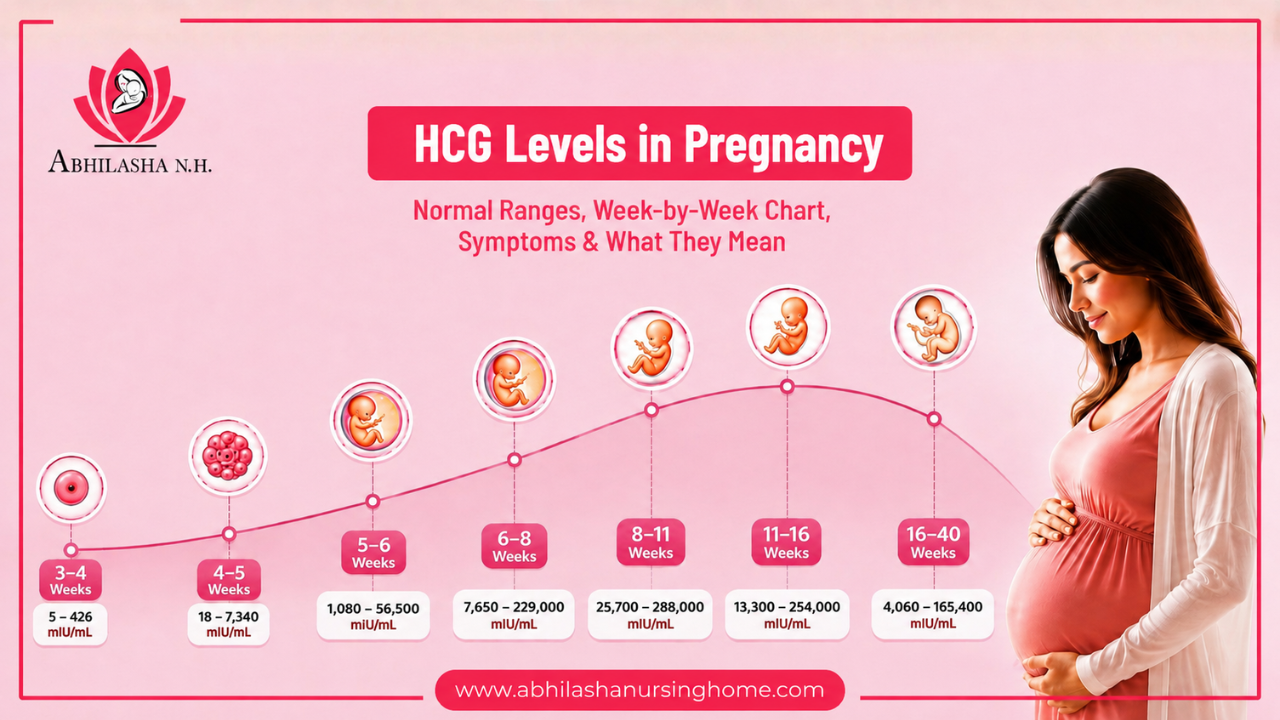
Normal HCG Levels in Pregnancy: Week-by-Week Chart
HCG levels vary significantly from one woman to another. A wide range of values can still be considered normal.
| Pregnancy Week | Typical HCG Range (mIU/mL) |
| 3 Weeks | 5–50 |
| 4 Weeks | 5–426 |
| 5 Weeks | 18–7,340 |
| 6 Weeks | 1,080–56,500 |
| 7–8 Weeks | 7,650–229,000 |
| 9–12 Weeks | 25,700–288,000 |
| 13–16 Weeks | 13,300–254,000 |
| 17–24 Weeks | 4,060–165,400 |
| 25–40 Weeks | 3,640–117,000 |
Important: These values are approximate reference ranges. Normal HCG levels can vary widely between pregnancies. Your doctor will interpret your results in the context of your gestational age, symptoms, and ultrasound findings.
How Do HCG Levels Change During Pregnancy?
One of the unique features of HCG is how quickly it rises during early pregnancy.
During the first few weeks, HCG levels typically increase rapidly, often doubling every 48 to 72 hours in many healthy pregnancies. This rapid rise helps support the developing embryo and maintain the pregnancy.
Around 8 to 11 weeks, HCG levels usually reach their peak. After this point, they gradually decline and stabilize for the remainder of the pregnancy.
It’s important to remember that the pattern of change is often more meaningful than a single HCG value.
How Are HCG Levels Tested?
There are two common ways to detect HCG:
Urine Pregnancy Test
Home pregnancy tests detect HCG in your urine and can usually identify pregnancy after a missed period. They provide a positive or negative result but do not measure the exact hormone level.
Blood HCG Test
A blood test measures the exact amount of HCG in your bloodstream. It is more sensitive than a urine test and can detect pregnancy earlier.
Doctors may recommend serial blood tests to observe how HCG levels change over time, particularly during early pregnancy or if there are concerns about the pregnancy’s progress.
Symptoms Associated with Rising HCG Levels
As HCG levels increase, many women begin experiencing common early pregnancy symptoms.
These may include:
- Missed period
- Morning sickness
- Nausea or vomiting
- Breast tenderness
- Fatigue
- Frequent urination
- Food cravings or aversions
- Mood swings
- Increased sense of smell
Every pregnancy is unique. Some women experience several symptoms, while others have very few.
What Do Low HCG Levels Mean?
Low HCG levels do not always indicate a problem.
Sometimes they occur because the pregnancy is earlier than expected due to later ovulation or implantation.
However, persistently low or slowly rising HCG levels may sometimes be associated with:
- Miscalculated pregnancy dates
- Ectopic pregnancy
- Early pregnancy loss
- Pregnancy that is not developing as expected
Because HCG values vary widely, doctors usually interpret them alongside ultrasound findings and repeat blood tests rather than relying on a single result.
What Do High HCG Levels Mean?
Higher-than-expected HCG levels are not always a cause for concern.
Possible reasons include:
- Incorrect pregnancy dating
- Multiple pregnancy (twins or more)
- Molar pregnancy (rare)
- Natural variation between pregnancies
Additional evaluation, including an ultrasound, may be recommended to determine the cause of unusually high HCG levels.
When Should You Contact Your Doctor?
While HCG levels are useful, your symptoms are equally important.
Contact your healthcare provider if you experience:
- Heavy vaginal bleeding
- Severe abdominal pain
- Persistent dizziness or fainting
- Severe vomiting leading to dehydration
- Shoulder pain with abdominal discomfort
- Fever or chills
Prompt medical evaluation helps identify and manage potential complications early.
Can HCG Levels Predict a Healthy Pregnancy?
Not by themselves.
Although HCG levels provide useful information during early pregnancy, they cannot confirm that a pregnancy is progressing normally on their own.
Doctors assess several factors together, including:
- HCG trends
- Ultrasound findings
- Baby’s heartbeat
- Gestational age
- Clinical symptoms
- Physical examination
This comprehensive approach provides a much clearer picture of pregnancy health than HCG levels alone.
Tips for a Healthy Pregnancy
While you cannot control your HCG levels, you can support a healthy pregnancy by:
- Attending regular prenatal checkups
- Taking prenatal vitamins as prescribed
- Eating a balanced, nutritious diet
- Staying well hydrated
- Getting adequate rest
- Avoiding smoking and alcohol
- Consulting your doctor before taking any medications
Healthy lifestyle habits contribute to your overall well-being and support your baby’s development.
Frequently Asked Questions (FAQs) About HCG Level in Pregnancy
Q 1. What are HCG levels in pregnancy?
Ans: HCG is a hormone produced by the placenta after implantation. It helps maintain early pregnancy and is detected by pregnancy tests.
Q 2. What is a normal HCG level?
Ans: Normal HCG levels vary greatly depending on the stage of pregnancy. Your doctor interprets your result based on gestational age and other clinical findings.
Q 3. How quickly should HCG levels rise?
Ans: In many healthy early pregnancies, HCG levels typically increase rapidly, often doubling every 48–72 hours, though normal patterns can vary.
Q 4. Can low HCG levels mean miscarriage?
Ans: Not always. Low HCG levels can result from incorrect pregnancy dating or natural variation. Repeat testing and ultrasound provide more accurate information.
Q 5. Can high HCG levels indicate twins?
Ans: Higher HCG levels may be seen in twin pregnancies, but they are not a reliable way to diagnose multiples. An ultrasound is needed for confirmation.
Q 6. Can stress affect HCG levels?
Ans: No. Stress does not directly change HCG levels during pregnancy.
Q 7. When do HCG levels peak?
Ans: HCG levels usually peak between 8 and 11 weeks of pregnancy before gradually declining.
Q 8. Is one HCG test enough?
Ans: Sometimes. However, if there are concerns about the pregnancy, your doctor may recommend repeated blood tests to monitor how HCG levels change over time.
Final Thoughts About HCG Level in Pregnancy
HCG is one of the earliest and most important hormones of pregnancy. It supports your baby’s development, helps maintain the pregnancy, and provides doctors with valuable information during the first trimester.
Remember that every pregnancy is unique, and HCG levels can vary significantly from one woman to another. Rather than focusing on a single number, doctors look at the overall trend, your symptoms, and ultrasound findings to understand how your pregnancy is progressing.
If you have questions about your HCG levels or any aspect of your pregnancy, don’t hesitate to speak with your healthcare provider. Early prenatal care and regular checkups are essential for monitoring both your health and your baby’s development.
At Abhilasha Nursing Home, our experienced gynecologists provide comprehensive prenatal care, pregnancy monitoring, ultrasound services, and personalized guidance throughout every stage of pregnancy. We’re committed to helping you enjoy a safe, healthy, and informed pregnancy journey.
Disclaimer: This article is intended for informational purposes only and should not replace professional medical advice, diagnosis, or treatment. Always consult your healthcare provider regarding your HCG levels, pregnancy test results, or any concerns during pregnancy.