

Pregnancy is a time when your body needs extra nutrients to support your health and your baby’s development. Among these nutrients, folic acid during pregnancy is especially important during the early stages of pregnancy.
Folic acid is a form of folate, a B vitamin that plays an important role in the development of your baby’s brain and spinal cord. Getting enough folic acid before conception and during early pregnancy can help reduce the risk of certain neural tube defects.
If you’ve recently found out that you’re pregnant, you may have questions like:
“Why is folic acid important during pregnancy?”
“How much folic acid should I take?”
“When should I start taking folic acid?”
“Can I get enough folate from food?”
Let’s understand the importance of folic acid, when to take it, food sources, dosage, and some common questions women have during pregnancy.
What Is Folic Acid?
Folic acid is a form of folate, which is a B vitamin also known as vitamin B9.
Folate naturally occurs in foods, while folic acid is commonly used in supplements and fortified foods.
Your body needs folate for several important functions, including:
- Making DNA and genetic material
- Supporting cell division
- Producing healthy red blood cells
- Supporting normal tissue growth
- Helping your baby’s neural tube develop properly
Because your baby’s cells are dividing rapidly during early pregnancy, adequate folate is particularly important during this stage.
Why Is Folic Acid Important During Pregnancy?
One of the most important reasons doctors recommend folic acid is its role in neural tube development.
The neural tube eventually develops into the baby’s brain and spinal cord. This development happens very early in pregnancy, often before a woman knows she is pregnant.
Adequate folic acid intake before conception and during early pregnancy helps reduce the risk of neural tube defects such as spina bifida.
Folic acid also supports the production of new cells and healthy blood formation.
This is why doctors common
ly recommend starting folic acid before pregnancy whenever possible, rather than waiting until a pregnancy test becomes positive.
When Should You Start Taking Folic Acid

Ideally, folic acid should be started before conception.
For women who may become pregnant, taking the recommended amount before conception helps ensure that adequate folate is available during the earliest stages of fetal development.
If you have already discovered that you’re pregnant and haven’t been taking folic acid, don’t panic. Speak with your doctor and start supplementation according to their recommendation.
Your healthcare provider may recommend continuing folic acid through at least the first 12 weeks of pregnancy, depending on your individual needs and prenatal supplement plan.
How Much Folic Acid Do You Need During Pregnancy?
For most women, health authorities recommend 400 micrograms (mcg) of folic acid daily before pregnancy and during early pregnancy.
However, the appropriate dose can vary depending on your medical history and individual risk factors.
Some women may be advised to take a higher dose under medical supervision, particularly if they have certain risk factors for neural tube defects.
Therefore, don’t increase the dosage yourself.
Your gynecologist can recommend the appropriate amount based on your health, previous pregnancy history, medications, and other factors.
Folic Acid vs Folate: What’s the Difference?
The terms folic acid and folate are often used interchangeably, but they are not exactly the same.
Folate is the naturally occurring form of vitamin B9 found in foods such as leafy green vegetables, beans, and legumes.
Folic acid is a form of vitamin B9 commonly used in supplements and fortified foods.
Both contribute to your body’s folate supply, but pregnancy supplements commonly contain folic acid because of its established role in preventing neural tube defects.
Foods Rich in Folate During Pregnancy
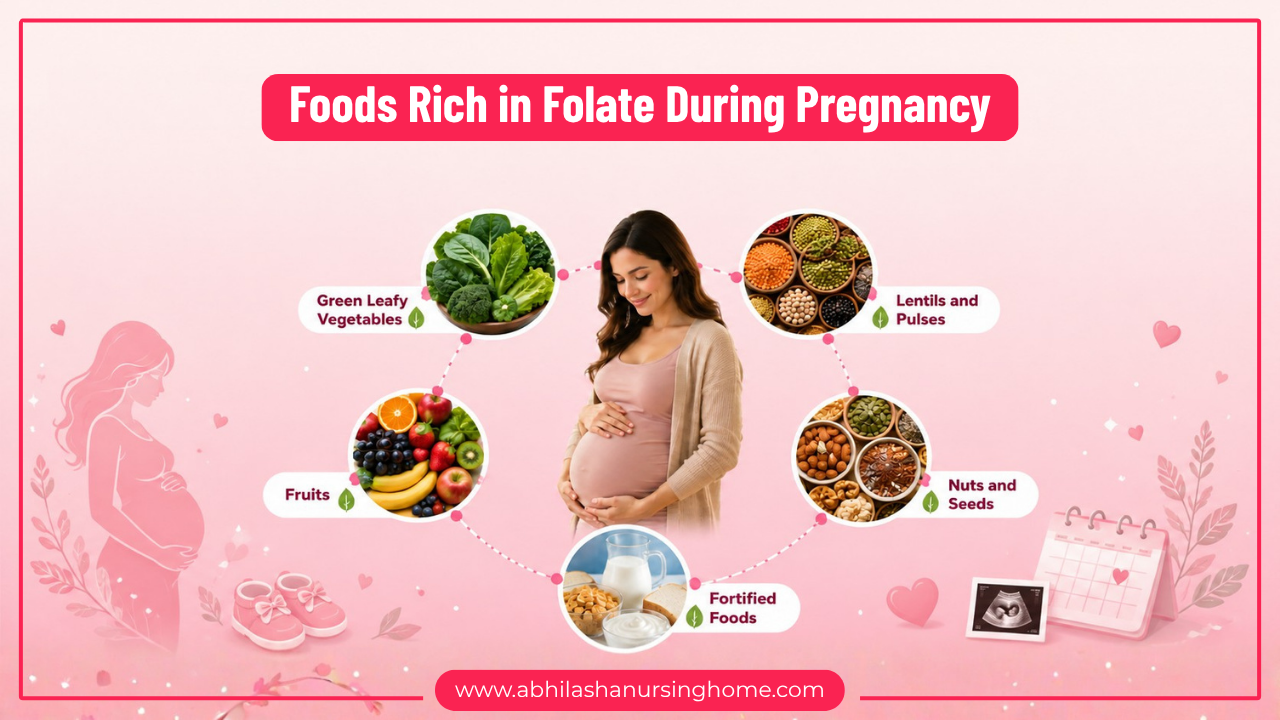
A healthy pregnancy diet can provide folate along with many other important nutrients.
Some good sources include:
Green Leafy Vegetables
Examples include:
- Spinach
- Fenugreek leaves
- Mustard greens
- Kale
- Other leafy greens
Lentils and Pulses
Indian diets offer several excellent folate sources, including:
- Dal
- Chickpeas
- Rajma
- Black-eyed peas
- Other beans and pulses
Fruits
Some fruits contain useful amounts of folate, including:
- Oranges
- Avocado
- Papaya
- Bananas
Nuts and Seeds
Nuts and seeds can contribute folate and other nutrients to your diet.
Examples include:
- Peanuts
- Almonds
- Sunflower seeds
- Flax seeds
- Fortified Foods
Some breakfast cereals, breads, and other foods may be fortified with folic acid.
Check the nutrition label to understand how much they provide.
Can Food Alone Provide Enough Folic Acid During Pregnancy

A nutritious diet is important, but food alone may not provide the recommended amount of folic acid needed during the critical early stages of pregnancy.
This is why healthcare providers commonly recommend a folic acid supplement.
Think of your diet and prenatal supplement as working together rather than choosing one over the other.
A balanced diet provides a range of vitamins, minerals, protein, fiber, and other nutrients, while supplementation helps ensure adequate folic acid intake.
What Happens If You Forget to Take Folic Acid?
If you occasionally forget a dose, don’t panic.
Take the missed dose when you remember unless it is nearly time for your next dose. Avoid taking extra doses to compensate unless your doctor specifically advises you to do so.
If you frequently forget your supplement, try connecting it with a daily habit such as:
- After breakfast
- After brushing your teeth
- With another prescribed daily medicine
If you’re unsure what to do after missing several doses, ask your healthcare provider.
Can You Take Folic Acid With Other Pregnancy Supplements?
Folic acid is commonly included in prenatal vitamins.
Depending on your individual needs, your doctor may also recommend supplements containing nutrients such as:
- Iron
- Calcium
- Vitamin D
- Vitamin B12
- Iodine
Don’t take multiple prenatal or vitamin supplements together without checking their ingredients. Taking several products can unintentionally lead to excessive intake of certain nutrients.
Your doctor can recommend a suitable prenatal supplement based on your needs.
Is Folic Acid Safe During Pregnancy?
Folic acid is widely recommended during pregnancy when taken at the appropriate dose.
However, more is not necessarily better.
Taking very high doses without medical supervision is not recommended. If your doctor has prescribed a higher dose because of specific risk factors, follow their instructions carefully.
Always tell your healthcare provider about any vitamins, supplements, or medications you are already taking.
Who May Need a Higher Dose of Folic Acid?
Most women need the standard recommended amount, but some women may be advised to take a higher dose because of certain risk factors.
These can include:
A previous pregnancy affected by a neural tube defect
- Certain medical conditions
- Certain medications
- Other factors identified by your healthcare provider
- The higher-dose recommendation should come from a doctor.
Do not self-prescribe high-dose folic acid.
What Are the Benefits of Folic Acid During Pregnancy?
Adequate folic acid intake during pregnancy can:
Support Neural Tube Development
Folic acid helps support the development of the baby’s brain and spinal cord.
Reduce the Risk of Neural Tube Defects
Taking the recommended amount before conception and during early pregnancy helps reduce the risk of certain neural tube defects.
Support Cell Growth
Rapid cell division occurs throughout pregnancy. Folate is essential for DNA synthesis and cell division.
Support Red Blood Cell Formation
Folate contributes to healthy red blood cell production and helps support normal blood formation.
Folic Acid During Different Stages of Pregnancy
Before Pregnancy
Starting folic acid before conception is ideal because neural tube development occurs very early.
If you’re planning pregnancy, discuss supplementation with your gynecologist.
First Trimester
The first trimester is particularly important because the neural tube develops during the early weeks.
Continue taking folic acid according to your doctor’s recommendation.
Second and Third Trimesters
Your folate needs remain important throughout pregnancy because your baby continues to grow and your body continues producing new cells and blood.
Your doctor may recommend continuing folic acid as part of your prenatal supplement regimen.
Tips for Taking Folic Acid Regularly
Taking a supplement consistently can sometimes be difficult, especially during the early weeks when nausea and fatigue are common.
Try these simple habits:
- Take it at the same time every day.
- Keep your supplement somewhere visible and safe.
- Set a daily phone reminder.
- Connect it with an existing routine.
- Keep track of doses if you tend to forget.
- Follow your doctor’s instructions regarding timing and dosage.
If your supplement makes you feel nauseous, ask your doctor whether changing the timing or formulation would be appropriate.
Frequently Asked Questions
Q 1. Is folic acid necessary during pregnancy?
Folic acid is strongly recommended during pregnancy, particularly before conception and during early pregnancy, because it supports neural tube development and reduces the risk of certain neural tube defects.
Q 2. When should I start taking folic acid?
Ideally, folic acid should be started before conception and continued during early pregnancy according to your healthcare provider’s advice.
Q 3. How much folic acid should I take during pregnancy?
For most women, the commonly recommended amount is 400 mcg daily before pregnancy and during early pregnancy. Some women may need a higher dose under medical supervision.
Q 4. Can I get folic acid from food?
Foods provide natural folate, including leafy greens, beans, lentils, citrus fruits, and fortified foods. However, a folic acid supplement is generally recommended because it can be difficult to obtain the recommended amount from diet alone.
Q 5. What if I started folic acid after finding out I was pregnant?
If you haven’t started taking folic acid, don’t panic. Contact your healthcare provider and begin supplementation according to their recommendation.
Q 6. Can I take folic acid with iron and calcium?
Many prenatal supplements contain folic acid along with other nutrients. Your doctor can advise you on which supplements you need and how to take them.
Q 7. Can too much folic acid be harmful?
Taking more than the recommended amount without medical advice is not recommended. Higher doses should only be taken when prescribed or specifically advised by your healthcare provider.
Key Takeaways
- Folic acid is an important B vitamin during pregnancy.
- It plays a crucial role in early development of the baby’s brain and spinal cord.
- Adequate folic acid before conception and during early pregnancy helps reduce the risk of certain neural tube defects.
- Most women are advised to take 400 mcg daily before pregnancy and during early pregnancy.
- Some women may require a higher dose based on individual risk factors.
- Leafy greens, beans, lentils, citrus fruits, and fortified foods provide folate.
- A folic acid supplement is commonly recommended even when you follow a healthy diet.
- Never take high-dose supplements without medical guidance.
Final Thoughts
Taking care of your nutrition is one of the simplest ways to support a healthy pregnancy, and folic acid during pregnancy plays a particularly important role.
Because critical development begins very early, ideally before you even know you’re pregnant, planning ahead can make a difference. If you’re trying to conceive, speak with your gynecologist about starting folic acid. If you’ve already received a positive pregnancy test, don’t worry if you haven’t started yet seek professional guidance and begin supplementation as advised.
At Abhilasha Nursing Home, our gynecology and maternity team provides personalized prenatal guidance, nutritional advice, pregnancy monitoring, and support throughout every stage of pregnancy.
Remember, supplements should complement not replace a balanced pregnancy diet and regular prenatal care.