
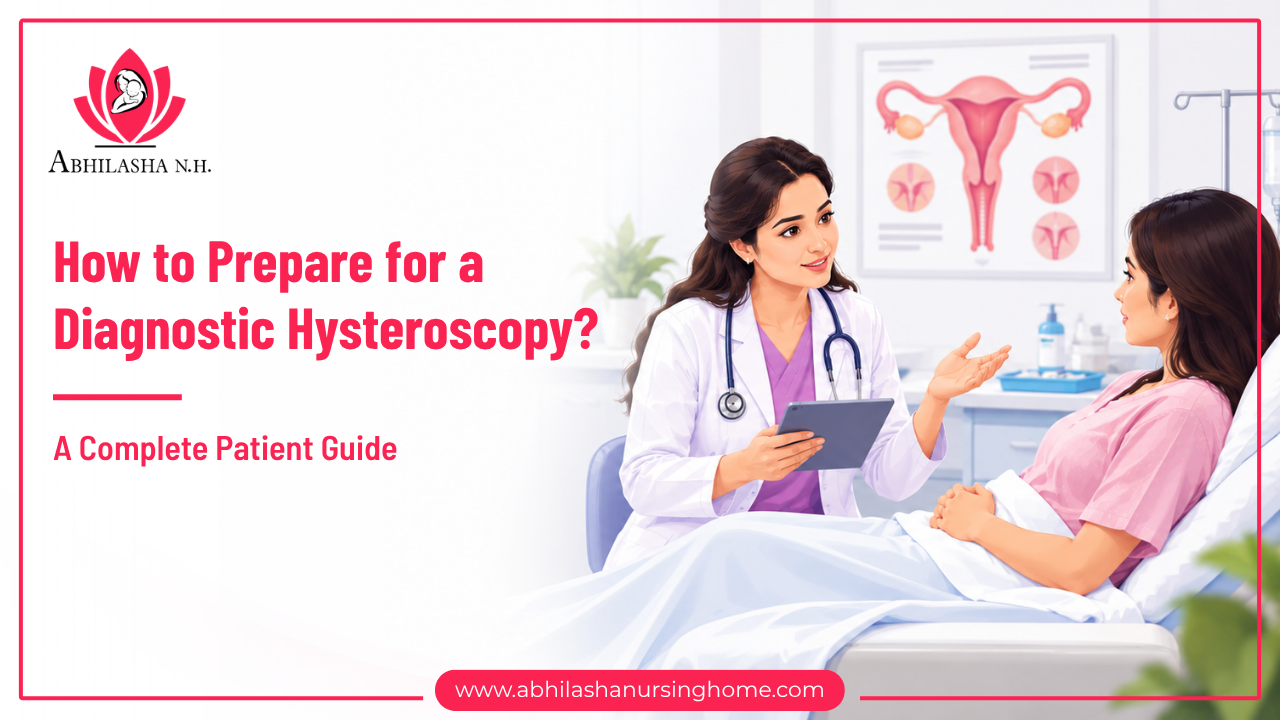
Being advised to undergo a diagnostic hysteroscopy can bring up several questions. What should you do before the procedure? Do you need to fast? Should you take your regular medicines? And how can you prepare yourself for the experience?
The good news is that preparing for a diagnostic hysteroscopy is usually straightforward, especially when you know what to expect. A little planning and a clear conversation with your gynecologist can help you feel more comfortable and confident.
In this guide, we explain how to prepare for a diagnostic hysteroscopy, what to discuss with your doctor, and what to remember on the day of your appointment.
What Is a Diagnostic Hysteroscopy?
A diagnostic hysteroscopy is a procedure that allows a gynecologist to examine the inside of the uterus using a thin, lighted instrument called a hysteroscope. It is inserted gently through the vagina and cervix, so no abdominal incision is needed.
The procedure may be recommended to investigate heavy or irregular menstrual bleeding, identify uterine polyps or certain fibroids, or evaluate selected fertility concerns and repeated miscarriages. In some cases, a small tissue sample may also be collected for further examination.
How to Prepare for a Diagnostic Hysteroscopy
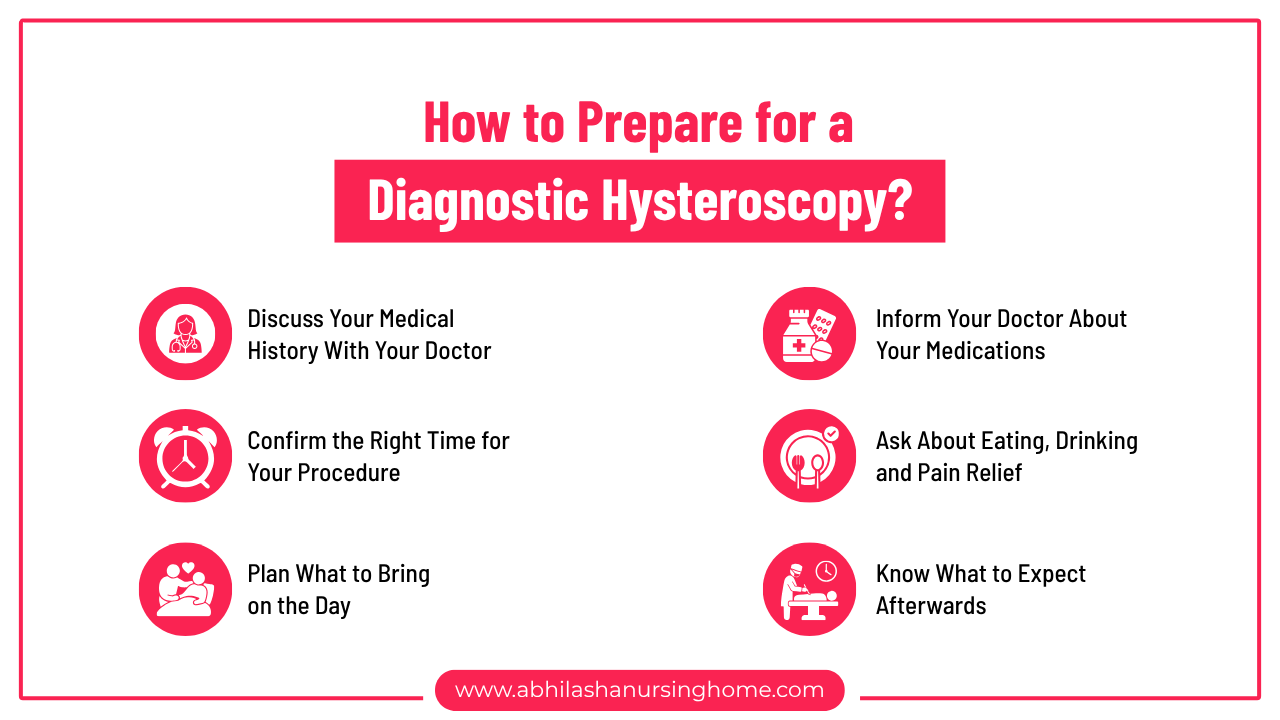
1. Discuss Your Medical History With Your Doctor
Before your appointment, tell your gynecologist about your medical history, existing health conditions, allergies and any previous gynecological procedures.
It is particularly important to mention if you have experienced severe period pain, pelvic pain, or discomfort during previous vaginal examinations. This information helps your doctor plan the procedure and discuss suitable pain-relief options.
If you feel anxious about the examination, share your concerns openly. Understanding your options beforehand can make the experience less stressful.
2. Inform Your Doctor About Your Medications
Make a list of all medicines you take, including prescription medicines, over-the-counter painkillers, vitamins and herbal supplements.
Do not stop or change any medication on your own. If you take blood-thinning medicines, diabetes medication or other medicines that may affect the procedure, ask your doctor whether any adjustments are needed.
Your instructions may differ depending on your health and whether the hysteroscopy is performed in an outpatient clinic or under anesthesia.
3. Confirm the Right Time for Your Procedure
Diagnostic hysteroscopy is generally scheduled when you are not having your menstrual period, because menstrual bleeding can make it harder to see the uterine lining clearly.
The ideal timing may depend on your menstrual cycle and the reason for the examination. Contact your clinic if your period starts unexpectedly around the appointment date.
It is also important to ensure that you are not pregnant. Tell your doctor if pregnancy is possible or if you have had unprotected sex since your last period. Your healthcare team may recommend a pregnancy test or rescheduling the procedure.
4. Ask About Eating, Drinking and Pain Relief
Preparation depends on how your hysteroscopy will be performed.
For an outpatient procedure without sedation or general anesthesia, you can often eat and drink normally. Your doctor may recommend a suitable painkiller beforehand, depending on your medical history.
If sedation or general anesthesia is planned, you may need to avoid food and drinks for a specified period. Follow the exact instructions provided by your hospital rather than assuming that fasting is or is not necessary.
Ask your gynecologist about available pain-relief options, what you may feel during the procedure, and what to do if you experience significant discomfort.
5. Plan What to Bring on the Day
A few simple preparations can make your appointment easier:
- Carry your previous ultrasound reports, investigation results and relevant medical records.
- Keep a list of your current medicines and known allergies.
- Wear comfortable clothing that is easy to change out of if required.
- Carry a sanitary pad in case you experience light spotting afterwards.
- Arrange for someone to accompany you if you are receiving sedation or general anesthesia, as you may not be able to drive yourself home.
If you have been given specific instructions by your clinic, follow those in preference to general advice.
6. Know What to Expect Afterwards
Most people can return home shortly after an uncomplicated outpatient hysteroscopy. Mild cramping, similar to period pain, and light spotting may occur for a few days.
If you receive sedation or general anesthesia, you may need additional observation and assistance getting home. Ask your doctor when you can resume work, exercise, sexual activity and other normal routines.
Contact your healthcare provider promptly if you develop heavy bleeding, fever, chills, severe or worsening abdominal pain, or unusual, foul-smelling discharge.
Frequently Asked Questions
Q.1. Do I need to fast before a diagnostic hysteroscopy?
Ans. Not always. Fasting requirements depend on whether you are having the procedure with or without sedation or general anesthesia. Follow your clinic’s specific instructions.
Q.2. Can I have a diagnostic hysteroscopy during my period?
Ans. It is generally scheduled outside menstrual bleeding because blood can affect visibility. If your period begins before the appointment, contact your clinic for guidance.
Q.3. Is diagnostic hysteroscopy painful?
Ans. The experience varies from person to person. Some women experience mild discomfort or period-like cramps, while others may find it more painful. Discuss pain relief and other available options with your gynecologist before the procedure.
Q.4. Can I go home on the same day?
Ans. In many cases, yes. Outpatient hysteroscopy usually allows you to return home shortly afterwards. Recovery and discharge arrangements may differ if sedation, general anesthesia or additional treatment is involved.
Final Thoughts
Preparing for a diagnostic hysteroscopy does not have to be overwhelming. Knowing when to schedule your procedure, discussing your medicines and pain-relief options, and following your doctor’s instructions can help you feel more prepared.
At Abhilasha Nursing Home, Agra, understanding your concerns and receiving clear guidance are important parts of gynecological care. If your doctor has recommended a diagnostic hysteroscopy, discuss your questions with your gynecologist so you can approach the procedure with greater confidence.
Medical disclaimer: This article is for general educational purposes only and is not a substitute for personalized medical advice. Always follow the instructions provided by your treating gynecologist or hospital.