
If you have undergone laparoscopy or your doctor has recommended it as part of your fertility treatment, you may wonder, “Can I get pregnant after laparoscopy?”
The good news is that many women can conceive after laparoscopy. In some cases, laparoscopic surgery may also improve the chances of pregnancy by identifying or treating certain conditions that can affect fertility.
However, laparoscopy does not guarantee pregnancy. Your chances of conceiving depend on several factors, including the reason for the surgery, your age, ovulation, ovarian function, fallopian tube health, uterine health, and sperm health.
Can I Get Pregnant After Laparoscopy?
Yes, pregnancy is possible after laparoscopy. The procedure itself generally does not prevent a woman from becoming pregnant.
In fact, laparoscopy is sometimes used to diagnose or treat conditions that may make conception more difficult, including:
- Endometriosis
- Pelvic adhesions
- Certain ovarian cysts
- Some fallopian tube problems
- Other conditions affecting the reproductive organs
Whether fertility improves after surgery depends on the condition being treated and your overall reproductive health.
How Can Laparoscopy Help With Fertility?
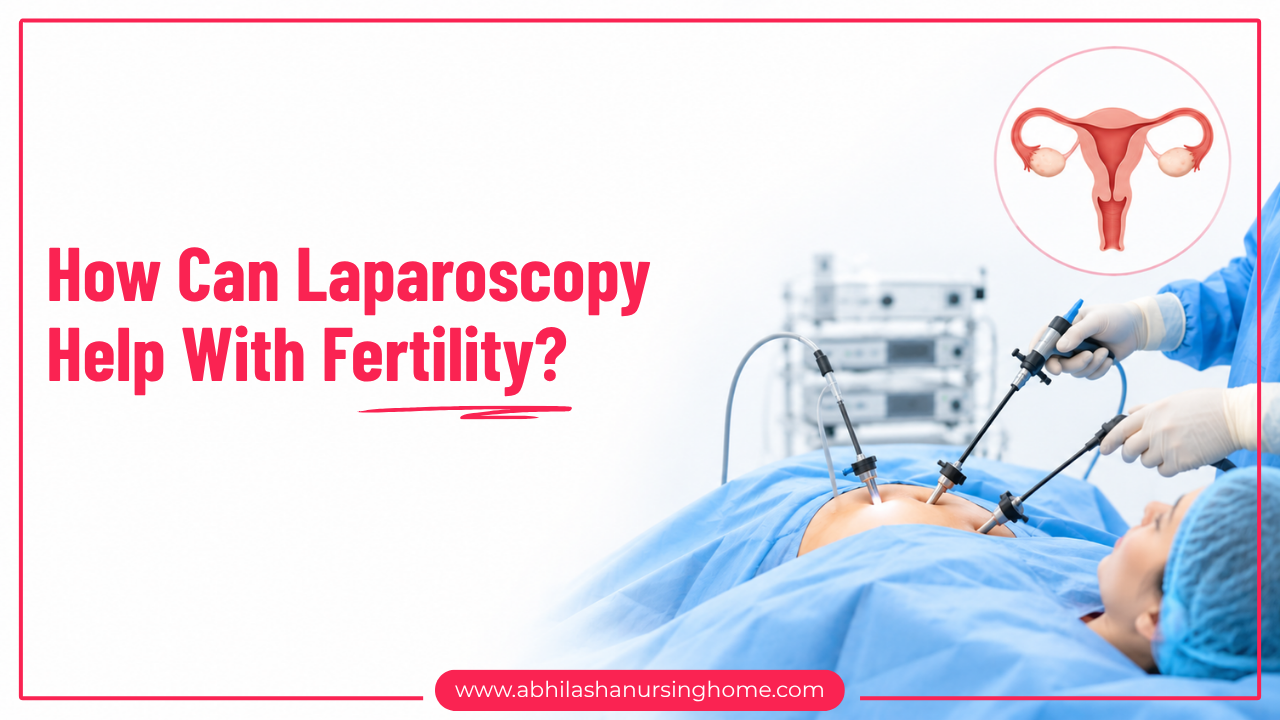
Laparoscopy allows a surgeon to directly examine the pelvic organs. This can help identify certain problems that may not be clearly visible through routine tests.
For example, the procedure may identify endometriosis, scar tissue, or pelvic adhesions. When appropriate, these conditions may be treated during the same surgery.
Treating an underlying problem may improve the conditions for conception in some women. However, the results vary, and not every fertility problem can be corrected through laparoscopy.
How Soon Can I Try for Pregnancy After Laparoscopy?
There is no fixed waiting period for every woman. The right time to start trying depends on the type of laparoscopic procedure you had and how your recovery is progressing.
After a diagnostic laparoscopy, your doctor may give different advice than after a more extensive procedure involving treatment of endometriosis, adhesions, cysts, or other conditions.
Your gynaecologist will tell you when it is safe to resume sexual activity and when you can start trying to conceive.
Does Laparoscopy Increase the Chances of Pregnancy?
Laparoscopy may improve the chances of conception in some women when it successfully identifies and treats a condition affecting fertility.
However, laparoscopy is not a treatment that guarantees pregnancy.
Fertility can be influenced by several factors, including:
- Age
- Ovulation and menstrual cycle
- Ovarian reserve
- Fallopian tube function
- Uterine health
- Endometriosis or other reproductive conditions
- Sperm health
- Overall health
Your doctor may recommend additional fertility tests or treatment depending on your individual situation.
What Should I Do After Laparoscopy If I Want to Conceive?

Once your doctor confirms that you have recovered and can start trying for pregnancy, follow the advice given for your specific situation.
You may be advised to:
- Attend your follow-up appointment
- Take prescribed medicines as directed
- Track your menstrual cycle and ovulation if recommended
- Maintain a balanced and nutritious diet
- Avoid smoking and other harmful substances
- Discuss prenatal vitamins and folic acid with your doctor
If you have concerns about your fertility after surgery, do not hesitate to discuss them during your follow-up appointment.
When Should You See a Doctor About Pregnancy After Laparoscopy?
If you have been trying to conceive without success, speak with a gynaecologist for personalised guidance. You may need further evaluation to identify other factors that could be affecting conception.
If your laparoscopy was performed for endometriosis, blocked or damaged fallopian tubes, or another fertility-related condition, your doctor may also recommend a specific fertility plan based on your treatment and reproductive health.
For Expert guidance after Laparoscopy, consult the gynecologist at Abhilasha Nursing Home.
FAQs About Pregnancy After Laparoscopy
Q 1. Can I have a healthy pregnancy after laparoscopy?
Yes. Many women can have a healthy pregnancy after laparoscopic surgery. Your individual chances depend on the reason for surgery and other fertility factors.
Q 2. How long after laparoscopy can I try to conceive?
The appropriate time varies depending on the procedure and your recovery. Follow the timeline recommended by your treating gynaecologist.
Q 3. Can laparoscopy cure infertility?
Laparoscopy cannot cure all causes of infertility. It may diagnose or treat certain conditions that can affect fertility, but pregnancy depends on several factors.
Q 4. Does laparoscopy guarantee pregnancy?
No. Laparoscopy may improve the chances of conception in selected cases, but it cannot guarantee pregnancy.
Final Thoughts
So, can you get pregnant after laparoscopy? Yes, pregnancy is possible for many women after the procedure. For some, laparoscopy may also help identify and treat conditions that were affecting fertility.
The right time to start trying and your chances of conception depend on your individual diagnosis, the type of surgery performed, your recovery, and other reproductive factors.
If you are planning a pregnancy after laparoscopy, speak with your gynaecologist about your recovery, when you can safely start trying, and whether any further fertility evaluation is needed.
At Abhilasha Nursing Home, Agra, women can consult a gynaecologist for personalised guidance regarding laparoscopic procedures, fertility concerns, and pregnancy planning.
Disclaimer: This article is intended for general informational purposes only and should not replace professional medical advice, diagnosis, or treatment. Fertility and recovery after laparoscopy vary from person to person. Always follow the advice of your treating doctor.