
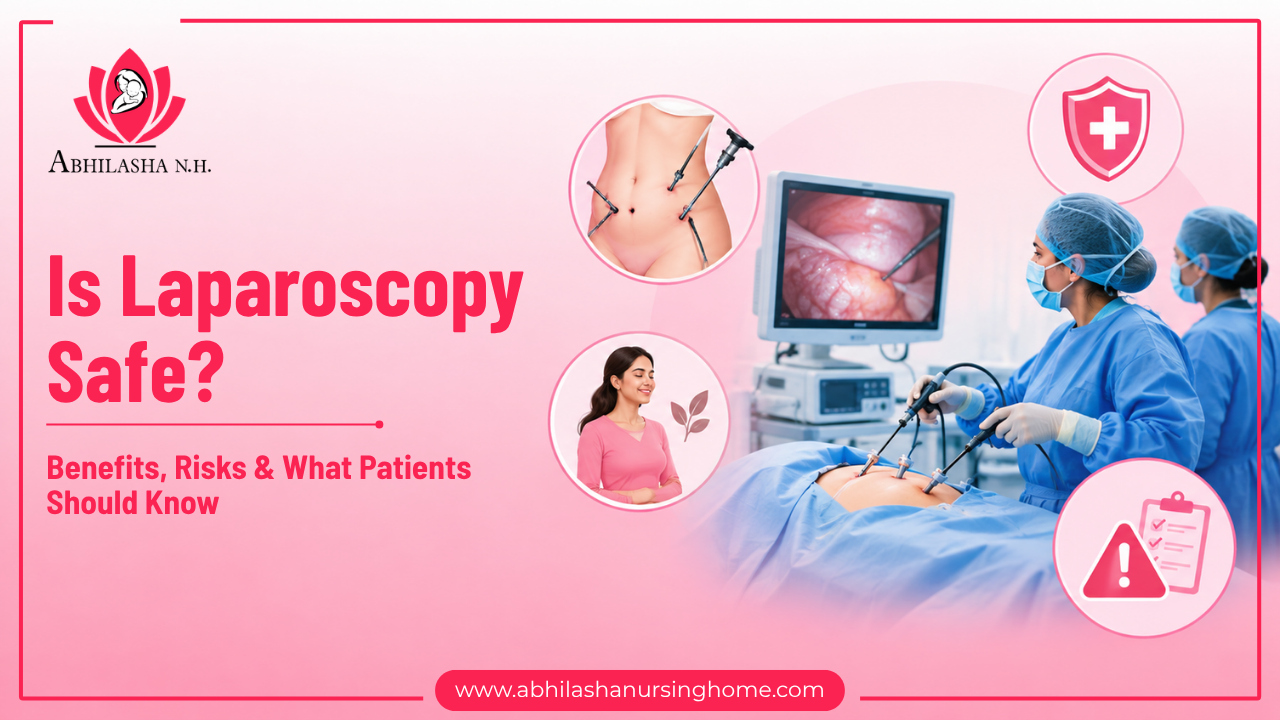
If your doctor has recommended laparoscopy, one of the first questions you may have is, “Is laparoscopy safe?” It is completely natural to feel concerned before any surgical procedure.
Laparoscopy is a commonly used minimally invasive surgical technique that allows doctors to examine or treat organs inside the abdomen and pelvis through small incisions. It is widely used in gynaecology for conditions such as endometriosis, ovarian cysts, fibroids, infertility-related conditions, and certain uterine or fallopian tube problems.
For many suitable patients, laparoscopy can be a safe and effective alternative to traditional open surgery. However, like any surgery, it has potential risks, and its suitability depends on the patient’s health and the procedure being performed.
Is Laparoscopy Safe?
Yes, laparoscopy is generally considered a safe surgical approach when performed by a qualified and experienced medical team on an appropriate patient.
During laparoscopy, a thin camera called a laparoscope is inserted through a small abdominal incision. Additional small incisions may be made if surgical instruments are required.
The procedure is usually performed under anaesthesia, and the medical team monitors the patient throughout surgery.
However, “safe” does not mean completely risk-free. Your doctor will assess your medical history, condition, and the planned procedure before recommending laparoscopy.
What Are the Benefits of Laparoscopy?
One of the main advantages of laparoscopy is that it uses smaller incisions compared with traditional open abdominal surgery.
Depending on the procedure, potential benefits may include:
- Smaller incisions
- Less incision-related discomfort
- Reduced visible scarring
- Earlier movement after surgery
- Shorter hospital stay in many cases
- Faster return to normal activities for some patients
The actual benefits vary depending on the type of surgery, your overall health, and how your body responds to treatment.
What Are the Risks of Laparoscopy?
Although complications are uncommon, laparoscopy, like every surgical procedure, can have risks.
Possible complications may include:
- Bleeding
- Infection
- Reaction to anaesthesia
- Injury to nearby organs or blood vessels
- Blood clots
- Problems related to the surgical procedure itself
- The need to change from laparoscopic surgery to open surgery in certain situations
Your doctor will discuss the relevant risks with you before the procedure.
Who May Need Extra Evaluation Before Laparoscopy?
Laparoscopy may not be suitable for everyone. Your doctor may consider factors such as:
- Previous abdominal or pelvic surgeries
- Existing medical conditions
- Heart or lung problems
- Certain blood-clotting conditions
- Pregnancy
- The complexity and location of the condition being treated
This does not automatically mean laparoscopy cannot be performed. Your doctor will assess your individual situation and decide which surgical approach is safest for you.
How Can You Make Laparoscopy Safer?
Following your doctor’s instructions before and after surgery can help support a safe recovery.
Before surgery:
- Tell your doctor about all medicines and supplements you take.
- Inform the medical team about allergies and existing health conditions.
- Follow instructions about fasting and medicines.
- Complete any tests recommended before surgery.
After surgery:
- Take prescribed medicines as directed.
- Follow wound-care instructions.
- Avoid strenuous activity until your doctor allows it.
- Attend your scheduled follow-up appointment.
- Contact your doctor if you develop unusual or worsening symptoms.
When Should You Seek Medical Help After Laparoscopy?
Some soreness, bloating, or tiredness can occur after laparoscopy. However, seek medical advice if you experience:
- Severe or worsening abdominal pain
- Heavy bleeding
- Persistent vomiting
- Fever or chills
- Increasing redness, swelling, or discharge around an incision
- Difficulty breathing
- Severe dizziness or fainting
Prompt medical evaluation can help identify and manage complications early.
FAQs About Laparoscopy Safety
Q 1. Is laparoscopy safer than open surgery?
Laparoscopy is a minimally invasive approach and may offer benefits such as smaller incisions and faster recovery for suitable patients. However, the safest surgical approach depends on the patient’s condition and the procedure required.
Q 2. Is laparoscopy safe for women?
Laparoscopy is commonly used in gynaecology and can be appropriate for many women. Your gynaecologist will assess your health and condition before recommending the procedure.
Q 3. Is laparoscopy safe for infertility treatment?
Laparoscopy may be used to diagnose or treat certain conditions associated with infertility, such as endometriosis, pelvic adhesions, or some problems involving the fallopian tubes. Whether it is appropriate depends on the individual situation.
Q 4. How long does it take to recover from laparoscopy?
Recovery varies according to the type and complexity of surgery. Some patients recover within a relatively short period, while more extensive procedures may require additional time.
Final Thoughts
So, is laparoscopy safe? For many appropriately selected patients, laparoscopy is a well-established and commonly performed minimally invasive surgical technique. It can offer important benefits while avoiding the larger incisions associated with traditional open surgery.
However, every surgery carries some risk. The best way to understand whether laparoscopy is safe and appropriate for you is to discuss your medical history, diagnosis, treatment options, and potential risks with your gynaecologist.
At Abhilasha Nursing Home, Agra, patients can consult a gynaecologist to understand their condition and receive guidance about appropriate treatment options, including laparoscopic procedures when medically suitable.
Disclaimer: This article is intended for general informational purposes only and should not replace professional medical advice, diagnosis, or treatment. The safety, benefits, risks, and recovery associated with laparoscopy can vary from person to person and depend on the type of procedure performed. Always follow the advice of your treating doctor.