
Congratulations you’ve reached 9 months pregnant, the final stage of an incredible journey. After months of physical changes, emotional moments, and exciting milestones, you’re now preparing to meet your little one.
By the ninth month, your baby is considered full-term (from 39 weeks onward) and is continuing to gain weight while the lungs, brain, and other organs complete their final stages of development. At the same time, your body is getting ready for labor and delivery.
You may notice stronger pelvic pressure, frequent Braxton Hicks contractions, difficulty sleeping, and changes in your baby’s movements. Naturally, you may also have many questions:
“How do I know when labor starts?”
“Is my baby’s movement normal at this stage?”
“What should I eat during the ninth month?”
“Which checkups are important before delivery?”
If you’re feeling excited, nervous, or even a little impatient, know that these emotions are completely normal. The ninth month is all about preparing for childbirth while continuing to care for yourself and your baby.
In this guide, we’ll cover everything you need to know about 9 months pregnancy symptoms, baby development, diet chart, important checkups, signs of labor, sleeping positions, and precautions to help you feel informed and confident as your due date approaches.
9 Months Pregnancy at a Glance
| Pregnancy Detail | Information |
| Pregnancy Month | Ninth Month |
| Weeks Covered | Week 33 to Week 40 |
| Baby Size | About the size of a watermelon (by Week 40) |
| Baby Length | Approximately 48–52 cm |
| Baby Weight | Around 2.5–3.5 kg |
| Major Development | Lungs mature, brain continues developing, baby gains weight, moves into birth position |
| Common Symptoms | Pelvic pressure, Braxton Hicks contractions, back pain, swelling, frequent urination, difficulty sleeping |
| Important Checkups | Weekly prenatal visits, blood pressure, urine tests, fetal monitoring, ultrasound (if required), Group B Streptococcus (GBS) screening (where recommended) |
What Happens During the Ninth Month of Pregnancy?
The ninth month covers weeks 33 to 40, bringing you to the final stage of pregnancy.
Your baby continues gaining weight, and many babies settle into a head-down position, preparing for birth. Although your baby has less room to move, you should continue feeling regular movements every day.
As your uterus reaches its largest size, it places increased pressure on your bladder, pelvis, and lower back. You may experience stronger Braxton Hicks contractions, increased pelvic discomfort, and difficulty finding a comfortable sleeping position.
During this month, regular prenatal checkups become especially important, allowing your healthcare provider to monitor both your health and your baby’s well-being.
Week-by-Week: What’s Happening During the Ninth Month
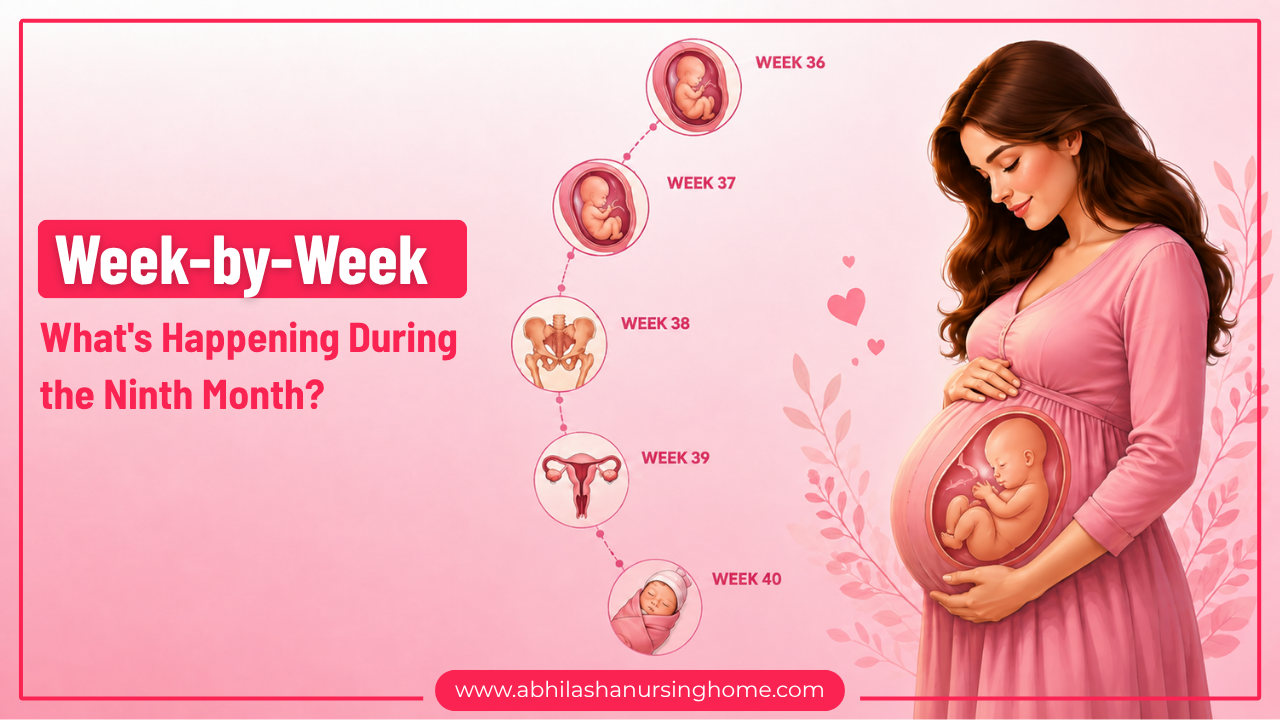
Pregnancy Week 33-34:
Your baby continues gaining weight, and the bones become stronger while remaining flexible for birth.
Pregnancy Week 35-36:
The lungs mature further, body fat increases, and your baby’s immune system continues developing.
Pregnancy Week 37-38:
Your baby is considered early term and continues preparing for life outside the womb. Many babies move lower into the pelvis during this time.
Pregnancy Week 39-40:
By full term, your baby’s lungs are ready for breathing, and all major organs are developed. Labor may begin at any time.
Changes Happening in Your Body
As your due date approaches, your body continues preparing for labor.
Common changes include:
- A larger baby bump
- Increased pelvic pressure
- Frequent urination
- Stronger Braxton Hicks contractions
- Difficulty sleeping
- Swelling in the feet and ankles
- Lower back pain
- Increased vaginal discharge
- Fatigue
- Occasional “lightening,” when the baby drops lower into the pelvis
Every pregnancy is unique, so some women may experience more symptoms than others.
9 Months Pregnancy Symptoms: What Can You Expect?
Pelvic Pressure: As your baby moves lower into your pelvis, you may feel increased heaviness and pressure, especially while walking or standing. Changing positions slowly and resting when needed can help.
Braxton Hicks Contractions: Practice contractions often become more noticeable during the ninth month. They are generally: Irregular, Mild, Short-lasting, and Relieved by rest or hydration.
If contractions become regular, stronger, and closer together, they may indicate the start of labor.
Frequent Urination: Your baby’s position places increased pressure on your bladder, making frequent bathroom visits common. Continue drinking enough water despite the inconvenience.
Lower Back Pain: Additional weight and pelvic changes may increase back discomfort. Using proper posture, gentle stretching, and pregnancy pillows may provide relief.
Swelling: Mild swelling of the feet and ankles is common. Elevate your legs when resting and avoid standing for long periods. However, sudden swelling with headaches or vision changes requires immediate medical attention.
Difficulty Sleeping: Many women find sleeping challenging during the final weeks. Sleeping on your left side with supportive pillows often improves comfort.
Fatigue: Even simple activities may feel exhausting. Listen to your body, rest frequently, and avoid overexertion.
Is It Normal for Baby Movements to Feel Different?
Yes,
During the ninth month, your baby has very little space to move freely.
Instead of sharp kicks, you may notice:
- Rolling movements
- Stretching
- Gentle pushes
- Hiccups
Although movements may feel different, your baby should continue moving regularly.
A noticeable reduction in movement should always be reported to your healthcare provider immediately.
Baby Development at 9 Months Pregnancy
Your baby is now almost ready to meet you.
By full term:
- Your baby measures approximately 48–52 cm in length.
- Weight reaches around 2.5 — 3.5 kg.
- The lungs are fully developed.
- The brain continues growing rapidly.
- The digestive system is ready to function after birth.
- Fingernails extend beyond the fingertips.
- Body fat increases, helping regulate temperature after birth.
- Most babies settle into a head-down position.
- Your baby continues practicing breathing, sucking, and swallowing.
Although your baby’s development is nearly complete, every extra week before labor helps support healthy growth if your pregnancy remains uncomplicated.
What Should You Eat During the Ninth Month of Pregnancy?
A balanced diet continues to support both your health and your baby’s final stages of growth. Focus on eating small, nutritious meals throughout the day.
Protein-Rich Foods: Eggs, Paneer, Lentils, Chicken, Fish (if approved), and Soy products
Iron-Rich Foods: Spinach, Dates, Beans, Beetroot, and Green leafy vegetables. Pair these foods with vitamin C-rich fruits for better absorption.
Calcium-Rich Foods: Support healthy bones by including – Milk, Yogurt, Cheese, Ragi, and Almonds.
Fruits and Vegetables: Eat a colorful variety of seasonal fruits and vegetables to provide vitamins, minerals, and fiber.
Whole Grains: Whole wheat roti, Oats, Brown rice, and Multigrain bread.
Foods to Avoid: Continue avoiding – Alcohol, Smoking and tobacco, Raw or undercooked seafood, Unpasteurized dairy, products, Excess caffeine, and Highly processed foods
Drink Water: Drink 8-10 glasses of water daily, unless your doctor advises otherwise.
Simple Diet Chart for 9 Months Pregnancy
| Meal | Suggested Foods |
| Breakfast | Vegetable oats or poha with milk and fruit |
| Mid-Morning Snack | Yogurt with nuts |
| Lunch | Dal, roti, vegetables, salad |
| Evening Snack | Fruit with roasted chana |
| Dinner | Paneer, chicken, fish, or dal with vegetables and brown rice |
| Bedtime | Warm milk (if recommended by your doctor) |
Important Checkups During the Ninth Month
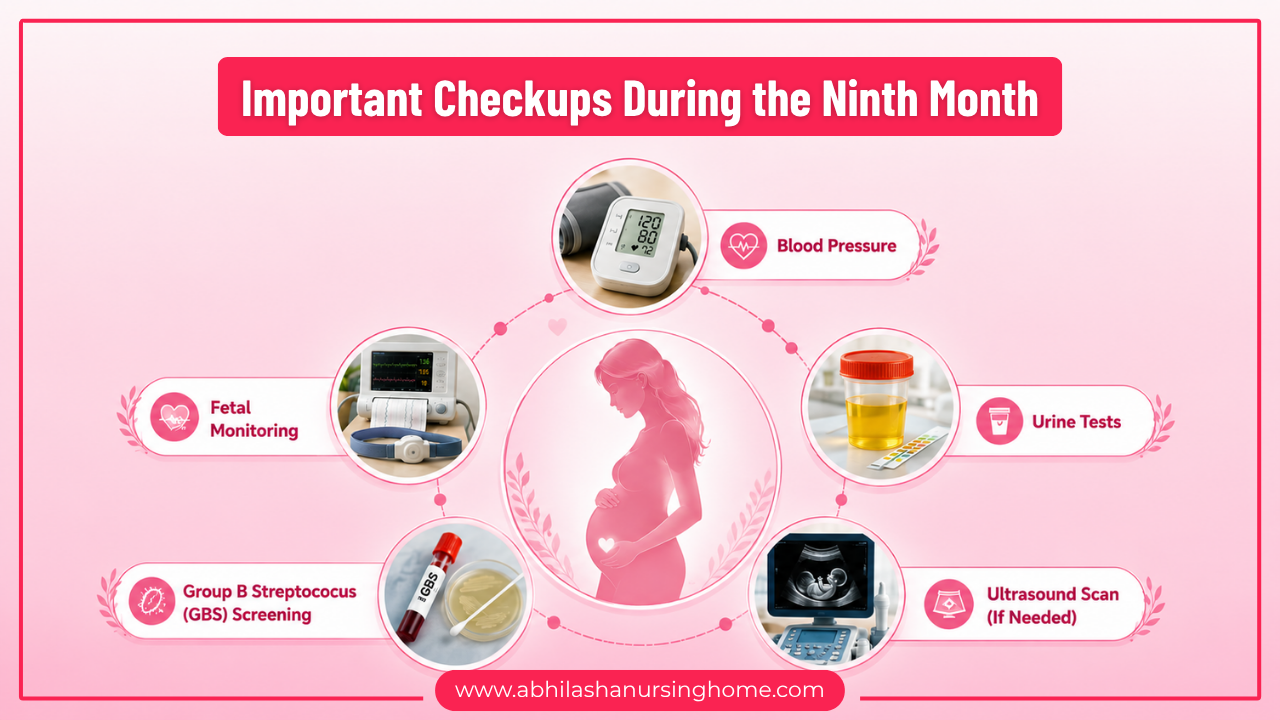
Prenatal visits usually become more frequent during the final month.
Your healthcare provider gynecologist and obstetrician may monitor:
Blood Pressure: Regular monitoring helps detect pregnancy-related hypertension.
Urine Tests: These help identify – Protein, Sugar, and Urinary infections.
Fetal Monitoring: Your doctor may assess – Baby’s heartbeat, Baby’s movements, Fundal height, Baby’s position, and Maternal weight.
Ultrasound Scan (If Needed): An ultrasound may evaluate: Baby’s growth, Placental position, Amniotic fluid levels, and Baby’s position before delivery.
Group B Streptococcus (GBS) Screening: In many pregnancies, your doctor may recommend a Group B Streptococcus (GBS) screening between 36 and 37 weeks. This test checks for bacteria that can sometimes affect newborns during delivery and helps your healthcare team plan appropriate care if needed.
Signs of Labor: When Should You Go to the Hospital?
As your due date approaches, it’s important to recognize the signs of labor.
Contact your healthcare provider or go to the hospital if you experience:
- Regular contractions that become stronger and closer together
- Leakage of amniotic fluid (“water breaking”)
- Bloody show (a mucus discharge mixed with blood)
- Persistent lower back pain with contractions
- Reduced baby movements
- Heavy vaginal bleeding
If you’re unsure whether labor has started, it’s always safest to speak with your healthcare provider.
Best Sleeping Position During the Ninth Month
Sleeping on your left side remains the recommended position during late pregnancy.
This position may:
- Improve blood flow to your baby
- Support healthy circulation
- Reduce pressure on major blood vessels
- Help decrease swelling
Use pillows between your knees and under your abdomen for additional support.
Preparing for Your Baby’s Arrival
The ninth month is the perfect time to complete your preparations for childbirth.
Make sure you have:
- Packed your hospital bag
- Kept important medical records ready
- Installed a newborn car seat (if applicable)
- Arranged transportation to the hospital
- Prepared baby essentials at home
- Discuss your birth plan with your healthcare provider
Being prepared can help you feel more confident as labor approaches.
Pregnancy Precautions During the Ninth Month
Do:
✔ Eat balanced meals
✔ Stay hydrated
✔ Take prenatal vitamins
✔ Attend all prenatal appointments
✔ Monitor your baby’s movements
✔ Rest whenever your body needs it
✔ Keep emergency contact numbers handy
Avoid:
✘ Smoking
✘ Alcohol
✘ Heavy lifting
✘ Self-medication
✘ Ignoring labor symptoms
✘ Missing prenatal checkups
Pregnancy Warning Signs You Should Never Ignore
Seek immediate medical attention if you experience:
- Heavy vaginal bleeding
- Leakage of fluid
- Severe abdominal pain
- Persistent severe headache
- Blurred vision
- High fever
- Sudden swelling of the face or hands
- Noticeably reduced baby movements
- Regular painful contractions before 37 weeks
Prompt medical care can help protect both you and your baby.
Emotional Changes During the Ninth Month
As delivery approaches, it’s natural to experience a mix of emotions.
You may feel:
- Excited to meet your baby
- Nervous about labor
- Impatient as your due date approaches
- Emotional or easily overwhelmed
Remember that every birth experience is different. Stay connected with your loved ones, attend your prenatal appointments, and don’t hesitate to discuss any concerns with your healthcare provider.
Frequently Asked Questions About 9 Months Pregnancy
Q 1. Is it normal for baby movements to feel different during the ninth month?
Yes. As space becomes limited, movements often feel more like rolling, stretching, or pushing. However, your baby should continue moving regularly every day.
Q 2. How do I know if labor has started?
Regular contractions that become stronger and closer together, water breaking, a bloody show, or persistent lower back pain may indicate labor. Contact your healthcare provider if you notice these signs.
Q 3. Can I travel during the ninth month?
Long-distance travel is generally not recommended during the final weeks of pregnancy. Always discuss travel plans with your healthcare provider.
Q 4. Can I continue walking during the ninth month?
Gentle walking is often encouraged if your pregnancy is uncomplicated, but follow your doctor’s advice regarding physical activity.
Q 5. What should I keep ready before delivery?
Pack your hospital bag, keep your medical records accessible, prepare baby essentials, and have a transportation plan ready before your due date.
Final Thoughts About 9 Months Pregnancy
The ninth month of pregnancy is a time of anticipation, preparation, and excitement. Your baby is nearly ready to enter the world, and every day brings you closer to one of life’s most memorable moments.
Continue eating a healthy diet, attending regular prenatal checkups, monitoring your baby’s movements, and following your healthcare provider’s advice. These simple steps can help support a safe pregnancy and delivery.
Most importantly, remember that labor may begin at any time, and every birth experience is unique. Trust your body, stay informed, and seek medical guidance whenever you have concerns.
If you’re in your 9th month of pregnancy, Abhilasha Nursing Home is here to support you with expert prenatal care, labor and delivery services, fetal monitoring, and compassionate maternity care to help you welcome your baby safely and confidently.
Disclaimer: This article is intended for informational purposes only and should not replace professional medical advice, diagnosis, or treatment. Always consult your healthcare provider regarding any pregnancy-related concerns.