
Reaching the fourth month of pregnancy is an exciting milestone. You’ve officially entered the second trimester, often considered the most comfortable phase of pregnancy. For many women, this is when morning sickness begins to fade, energy levels improve, and pregnancy starts feeling more real as the baby grows rapidly.
At this stage, you may have several questions running through your mind.
“Why is my appetite increasing?”
“When will I start feeling my baby’s movements?”
“What foods should I eat now?”
“Which pregnancy tests are important during this month?”
If these questions sound familiar, you’re not alone. The fourth month brings many physical and emotional changes, and understanding what’s happening can help you enjoy this phase with greater confidence.
In this guide, we’ll walk you through everything you need to know about 4 months pregnancy symptoms, baby development, diet, checkups, precautions, and self-care to help you have a healthy and comfortable pregnancy.
4 Months Pregnancy at a Glance
| Pregnancy Detail | Information |
| Pregnancy Month | Fourth Month |
| Weeks Covered | Week 13 to Week 16 |
| Baby Size | About the size of an avocado |
| Baby Length | Approximately 11–12 cm |
| Baby Weight | Around 100 grams |
| Major Development | Bones strengthen, facial features develop, baby becomes more active |
| Common Symptoms | Growing baby bump, increased appetite, backache, skin changes |
| Important Checkups | Ultrasound, blood tests, urine tests, blood pressure monitoring |
What Happens During the Fourth Month of Pregnancy?
The fourth month includes weeks 13 to 16 and marks the beginning of the second trimester.
For many women, this is one of the most enjoyable stages of pregnancy. Symptoms like nausea and vomiting often improve, while energy levels gradually return.
Meanwhile, your baby is growing rapidly. The skeleton becomes stronger, facial features become more defined, and tiny movements begin inside the womb. Although many mothers won’t feel these movements just yet, their baby is already stretching, kicking, and practicing reflexes.
Your uterus continues to expand, making your pregnancy more noticeable. You may also experience an increase in appetite as your body works to support your baby’s development.
Week-by-Week: What’s Happening During the Fourth Month?
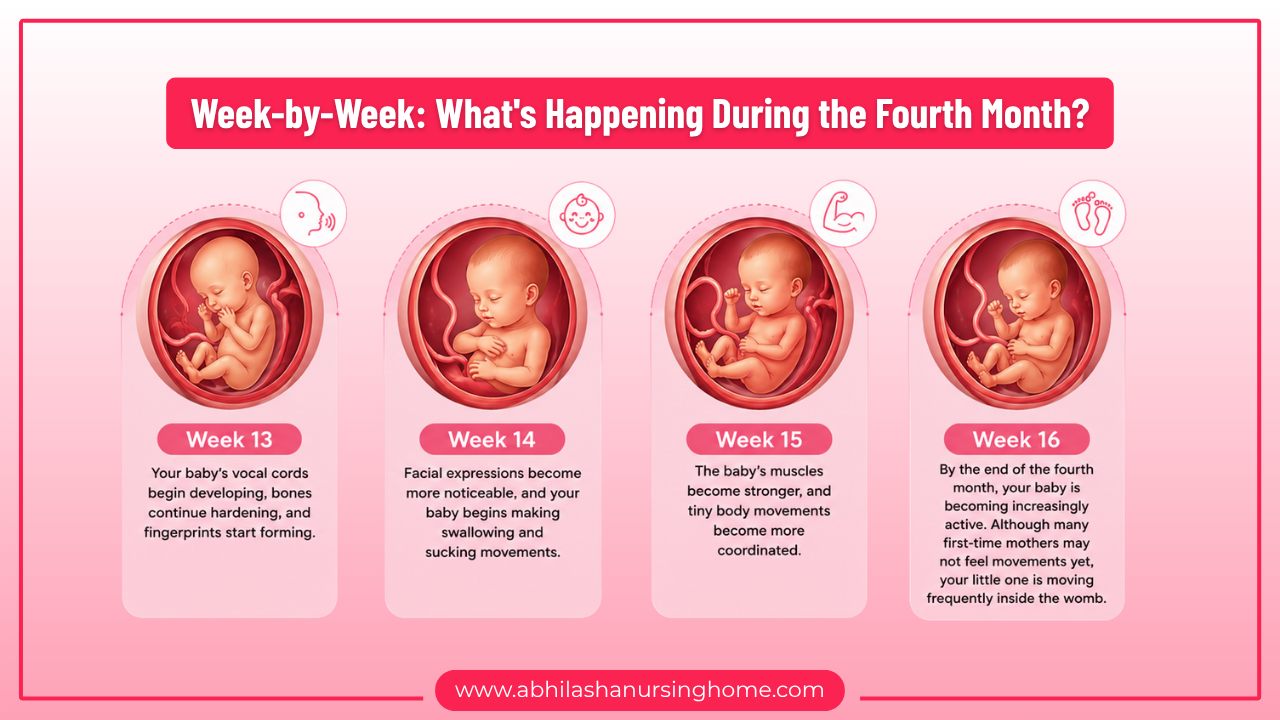
Pregnancy Week 13:
Your baby’s vocal cords begin developing, bones continue hardening, and fingerprints start forming.
Pregnancy Week 14
Facial expressions become more noticeable, and your baby begins making swallowing and sucking movements.
Pregnancy Week 15
The baby’s muscles become stronger, and tiny body movements become more coordinated.
Pregnancy Week 16
By the end of the fourth month, your baby is becoming increasingly active. Although many first-time mothers may not feel movements yet, your little one is moving frequently inside the womb.
Changes Happening in Your Body During the Fourth Month
As you enter the second trimester, your body continues adapting to your growing baby.
You may notice:
- A visible baby bump
- Increased appetite
- Reduced nausea
- Fuller breasts
- Mild back pain
- Stretching sensations in the abdomen
- Increased vaginal discharge
- Healthier-looking hair and glowing skin
Every woman’s pregnancy is unique. Some changes may appear earlier, while others develop gradually.
4 Months Pregnancy Symptoms: What Can You Expect?
Every pregnancy is different, but these are some of the most common symptoms during the fourth month.
Growing Baby Bump
Your uterus is now expanding above the pelvis, making your belly more noticeable.
Some women begin showing earlier, while others may not have a visible bump until later. Both are completely normal.
Reduced Morning Sickness
One of the biggest reliefs during the fourth month is that nausea often begins to improve.
Although some women may continue experiencing mild nausea, most notice a significant reduction compared to the first trimester.
Eating small, frequent meals can help if nausea persists.
Increased Appetite
As your body needs more nutrients to support your growing baby, you may notice that you’re feeling hungrier than usual.
Choose nutritious meals instead of highly processed snacks to ensure both you and your baby receive essential nutrients.
Mild Abdominal Stretching
As your uterus grows, you may experience pulling or stretching sensations in your lower abdomen.
These are often caused by stretching ligaments that support the uterus and are usually nothing to worry about.
However, severe pain should always be discussed with your doctor.
Skin Changes
Pregnancy hormones can affect your skin in different ways.
You may notice:
- A natural pregnancy glow
- Acne or oily skin
- Dark patches on the face (melasma)
- A dark line down the abdomen (linea nigra)
Most of these changes gradually fade after delivery.
Back Pain
As your posture changes to support your growing belly, mild lower back discomfort may develop.
Maintaining good posture, gentle stretching, and getting enough rest can help reduce discomfort.
Emotional Changes
Although the second trimester is often emotionally easier than the first, hormonal changes can still affect your mood.
It’s completely normal to feel excited one day and anxious the next.
Talking with your partner, family, or healthcare provider can help you feel more supported.
Is Mild Abdominal Pain Normal During the Fourth Month?
Many women experience mild abdominal discomfort during the fourth month.
As your uterus expands, the ligaments supporting it stretch, sometimes causing brief sharp or pulling sensations.
This type of discomfort is generally harmless.
However, severe pain, persistent cramping, or pain accompanied by bleeding should be evaluated immediately by your healthcare provider.
Baby Development at 4 Months Pregnancy
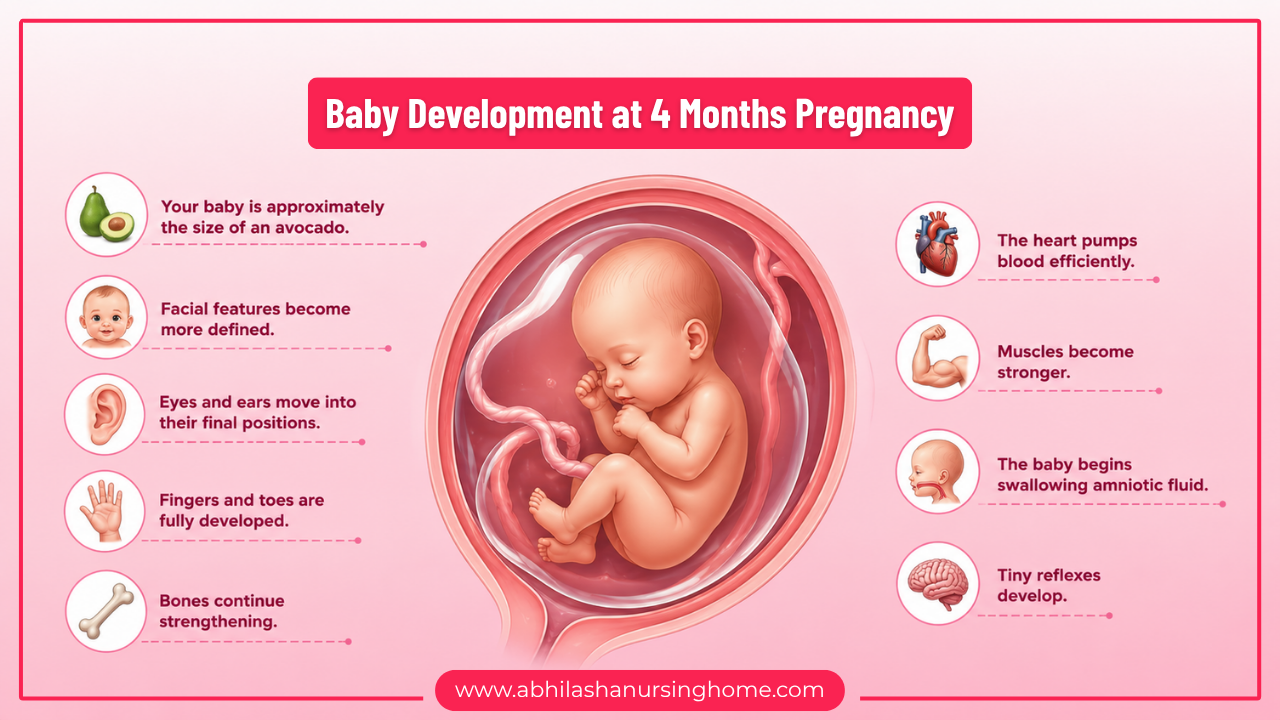
The fourth month is one of the most exciting stages of fetal development.
By the end of week 16:
- Your baby is approximately the size of an avocado.
- Facial features become more defined.
- Eyes and ears move into their final positions.
- Fingers and toes are fully developed.
- Bones continue strengthening.
- The heart pumps blood efficiently.
- Muscles become stronger.
- The baby begins swallowing amniotic fluid.
- Tiny reflexes develop.
Although you may not feel movement yet, your baby is constantly stretching, kicking, and exploring the space inside the womb.
How Big Is Your Baby at 4 Months?
By the end of the fourth month, your baby measures approximately 11-12 cm in length and weighs around 100 grams.
That’s about the size of an avocado.
Despite still being small, your baby’s body systems continue developing rapidly in preparation for the months ahead.
Image Suggestion: Avocado vs Baby Size Comparison
What Should You Eat During the Fourth Month of Pregnancy?
A balanced diet plays an important role in supporting your baby’s growth and maintaining your health.
Rather than eating more, focus on eating nutritious foods from a variety of food groups.
A healthy fourth-month pregnancy diet should include:
- Fresh fruits and vegetables
- Whole grains
- Protein-rich foods
- Dairy products
- Healthy fats
- Plenty of water
Protein-Rich Foods
Protein supports healthy muscle and organ development.
Include:
- Eggs
- Paneer
- Yogurt
- Lentils
- Beans
- Chicken and fish (if recommended by your doctor)
Iron-Rich Foods
Iron helps prevent anemia and supports increased blood production.
Good sources include:
- Spinach
- Beetroot
- Dates
- Beans
- Whole grains
Calcium-Rich Foods
Calcium helps build strong bones and teeth.
Include:
- Milk
- Curd
- Cheese
- Ragi
- Almonds
Fruits and Vegetables
Fresh fruits and vegetables provide vitamins, minerals, antioxidants, and fiber.
Excellent choices include:
- Apples
- Bananas
- Oranges
- Guava
- Carrots
- Leafy green vegetables
Whole Grains
Whole grains provide long-lasting energy and help improve digestion.
Choose:
- Oats
- Brown rice
- Whole wheat roti
- Multigrain bread
Foods to Avoid
During pregnancy, avoid:
- Raw or undercooked meat
- Raw seafood
- Unpasteurized dairy products
- Excess caffeine
- Alcohol
- Smoking and tobacco products
- Highly processed and sugary foods
Always follow your doctor’s dietary advice.
A Simple Pregnancy Diet Plan
- Breakfast: Oats with milk, fruit, and nuts
- Mid-Morning Snack: Fresh fruit with yogurt
- Lunch: Dal, whole wheat roti, vegetables, and salad
- Evening Snack: Roasted chana or mixed nuts
- Dinner: Protein-rich meal with vegetables and whole grains
Eating smaller meals throughout the day can help maintain steady energy levels.
Important Checkups During the Fourth Month
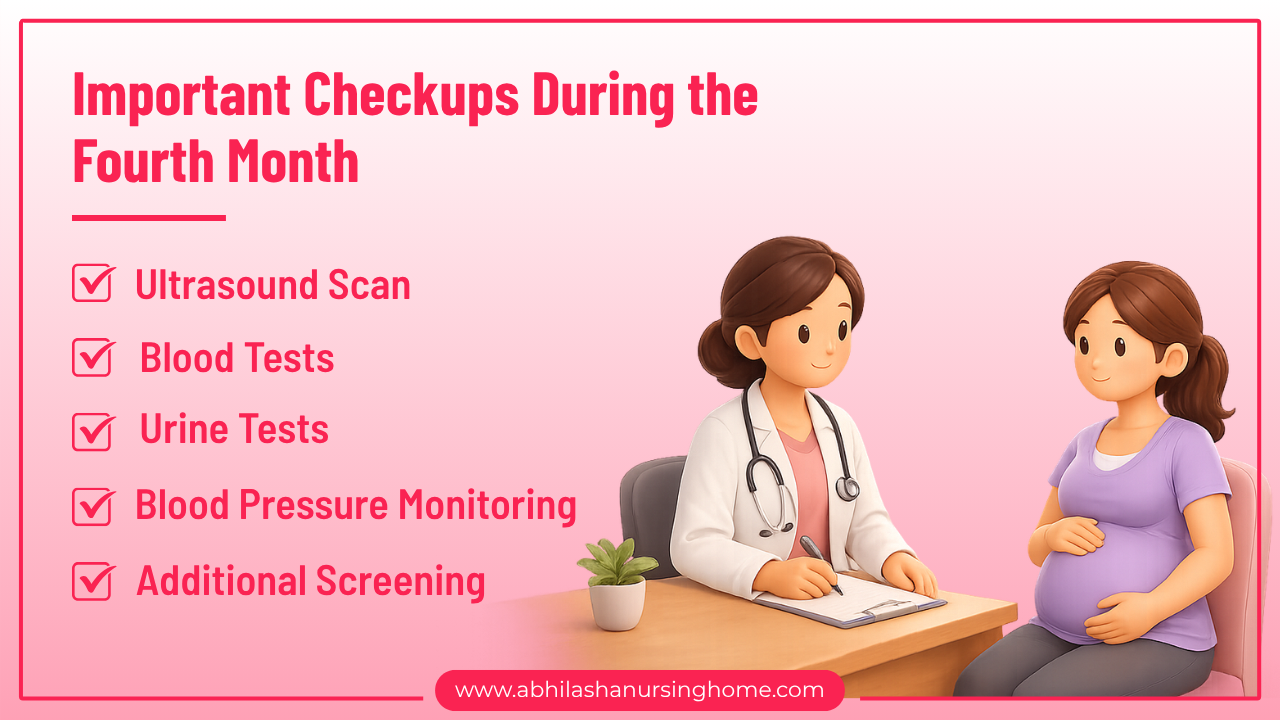
Regular prenatal visits help monitor both your health and your baby’s development.
Ultrasound Scan: Your doctor may recommend an ultrasound to assess: Baby’s growth, Heartbeat, Movement, and Overall development.
Blood Tests: These may be performed to evaluate: Iron levels, Blood sugar, Hemoglobin, Vitamin deficiencies, and General health.
Urine Tests: Urine testing helps detect: Urinary tract infections, Sugar levels, and Protein levels.
Blood Pressure Monitoring: Routine blood pressure checks help identify pregnancy-related complications early.
Additional Screening: Depending on your medical history, your doctor may recommend additional genetic or specialized screening tests.
Pregnancy Precautions During the Fourth Month
The second trimester is generally more comfortable, but healthy habits remain essential.
Do:
✔ Eat a balanced diet
✔ Stay hydrated
✔ Exercise gently if advised
✔ Get enough sleep
✔ Attend regular prenatal appointments
✔ Take prescribed supplements
Avoid:
✘ Smoking
✘ Alcohol
✘ Self-medication
✘ Heavy lifting
✘ Excess junk food
✘ Missing prenatal checkups
Pregnancy Warning Signs You Should Never Ignore
Contact your doctor immediately if you experience:
- Heavy vaginal bleeding
- Severe abdominal pain
- Fluid leakage
- High fever
- Severe headache
- Blurred vision
- Persistent vomiting
- Fainting
- Difficulty breathing
Prompt medical attention can help prevent complications.
Emotional Changes During the Fourth Month
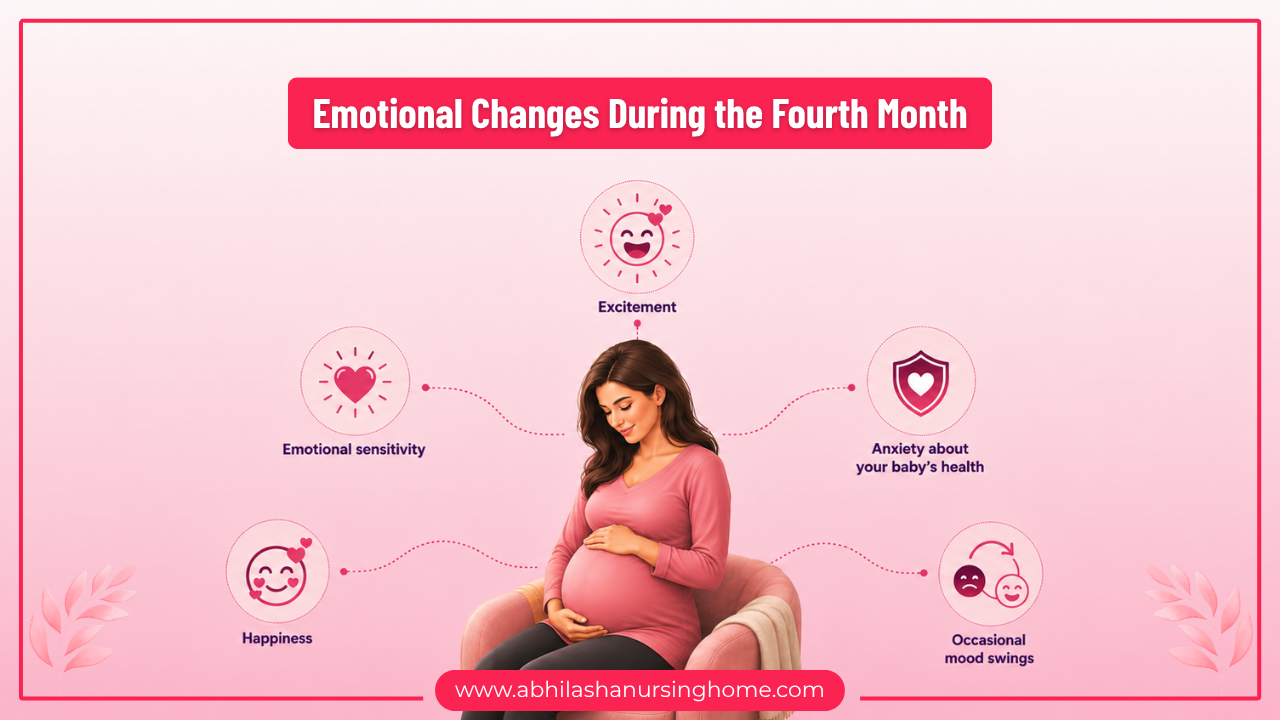
Pregnancy affects both your body and your emotions.
During the fourth month, you may experience:
- Excitement
- Emotional sensitivity
- Anxiety about your baby’s health
- Happiness
- Occasional mood swings
Remember that these emotions are completely normal.
Take time to relax, connect with loved ones, and celebrate the small milestones of your pregnancy journey.
Frequently Asked Questions: 4 Months Pregnancy
Q 1. Can I feel my baby’s movements during the fourth month?
Ans: Some women, especially those who have been pregnant before, may begin feeling light fluttering movements around 16 weeks. First-time mothers usually notice movements between 18 and 22 weeks.
Q 2. Is it normal for my appetite to increase?
Ans: Yes. As your baby grows, your body needs additional nutrients, so feeling hungrier is completely normal.
Q 3. Can I travel during the fourth month?
Ans: Most women with healthy pregnancies can travel safely during the second trimester. Always discuss travel plans with your doctor first.
Q 4. Is exercise safe during the fourth month?
Ans: Light activities such as walking and prenatal yoga are generally safe if approved by your healthcare provider.
Q 5. Why is my belly still small?
Ans: Every pregnancy is different. Belly size depends on your body type, muscle tone, and whether it’s your first pregnancy.
Q 6. Is mild abdominal stretching normal?
Ans: Yes. Mild stretching sensations usually occur because the uterus and supporting ligaments are expanding.
Final Thoughts: 4 Months Pregnancy
The fourth month of pregnancy marks the beginning of an exciting new phase. As you enter the second trimester, many of the discomforts of early pregnancy begin to ease, while your baby continues to grow and develop at an incredible pace.
By eating a nutritious diet, attending regular prenatal checkups, staying active, and getting enough rest, you are creating the best possible environment for your baby’s healthy development.
Remember, every pregnancy is unique. Some women experience many changes, while others notice only a few. Both can be completely normal.
If you have entered your fourth month of pregnancy or have questions about your prenatal care, don’t hesitate to seek professional guidance. At Abhilasha Nursing Home, our experienced gynecologists provide compassionate pregnancy care, expert prenatal guidance, routine checkups, and personalized support to help you enjoy a healthy and confident pregnancy journey.
Disclaimer: This article is intended for informational purposes only and should not replace professional medical advice, diagnosis, or treatment. Always consult your healthcare provider regarding any pregnancy-related concerns.